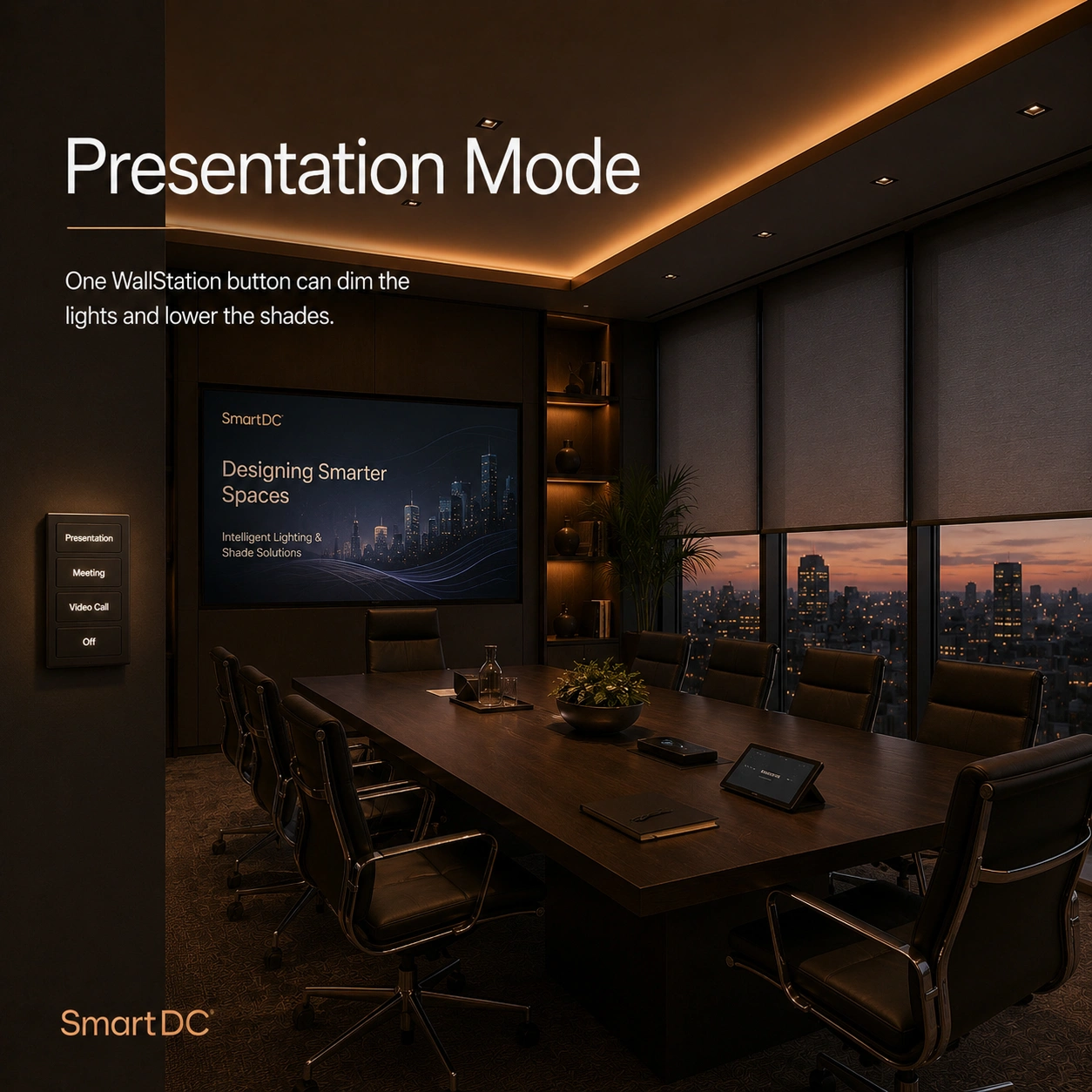
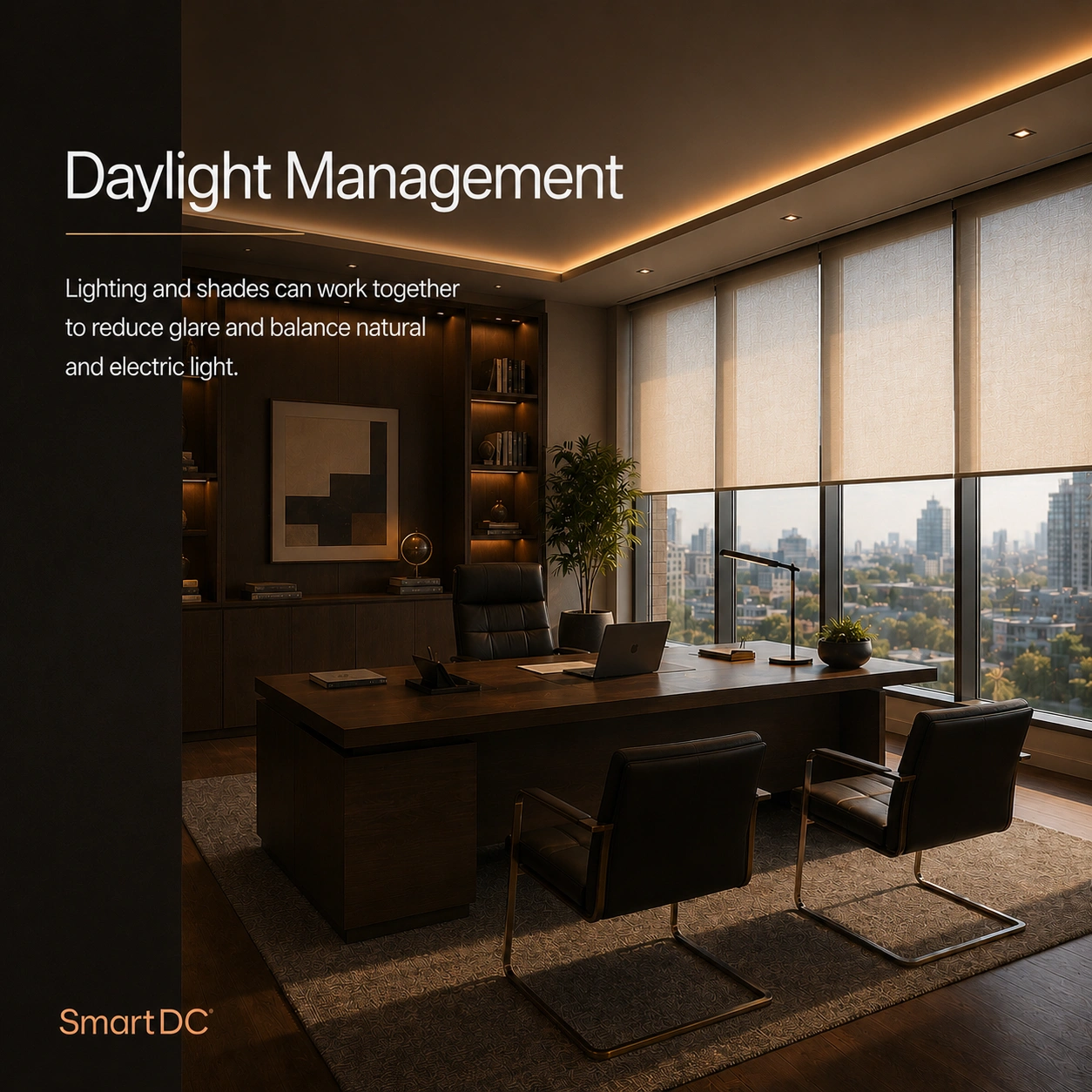
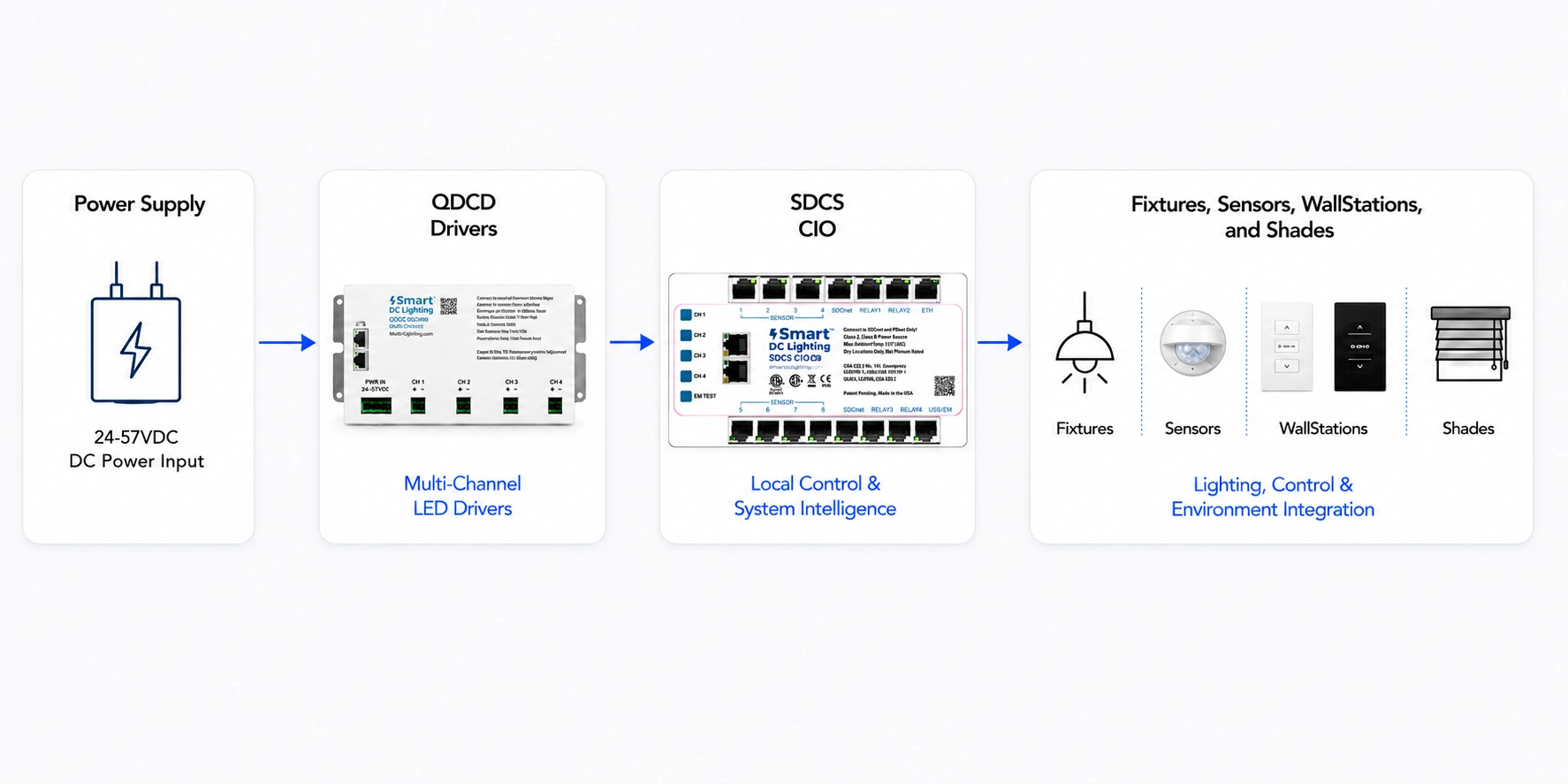
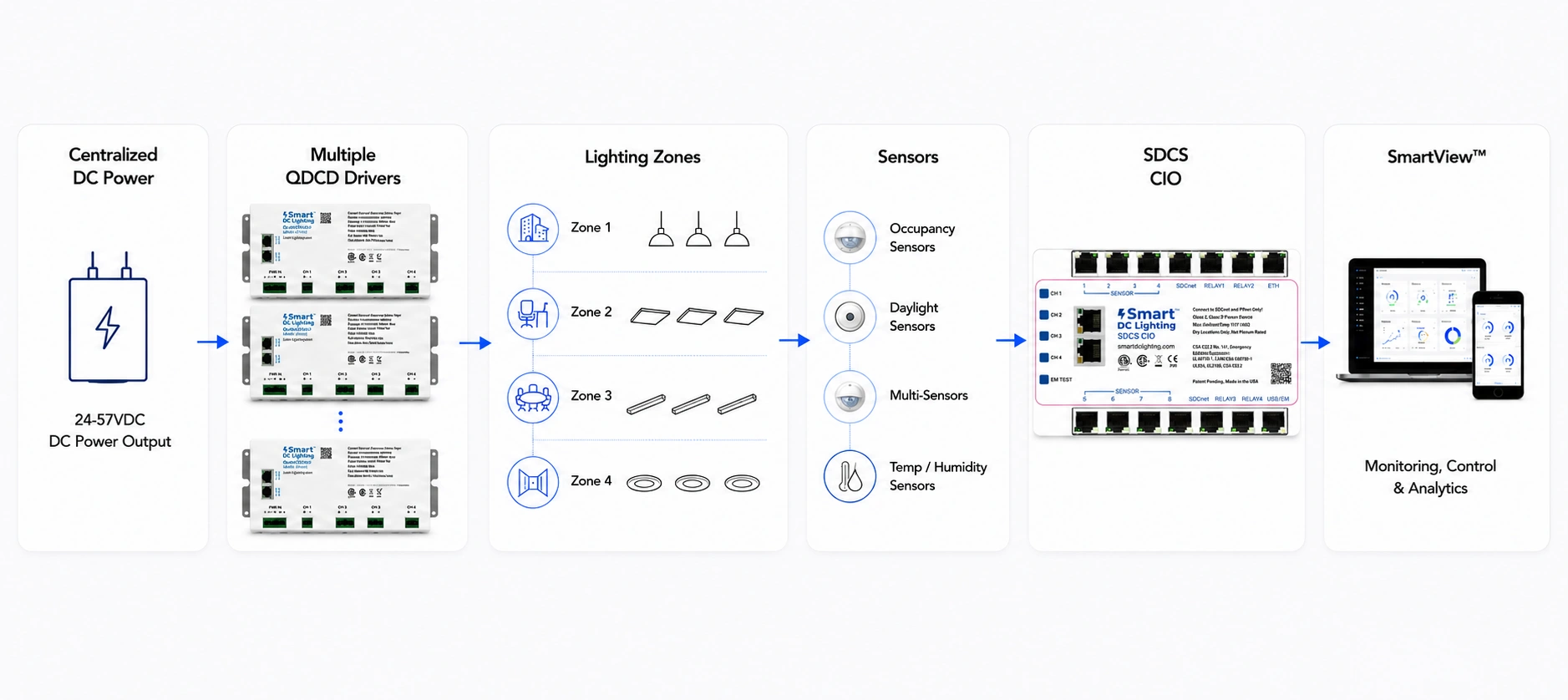
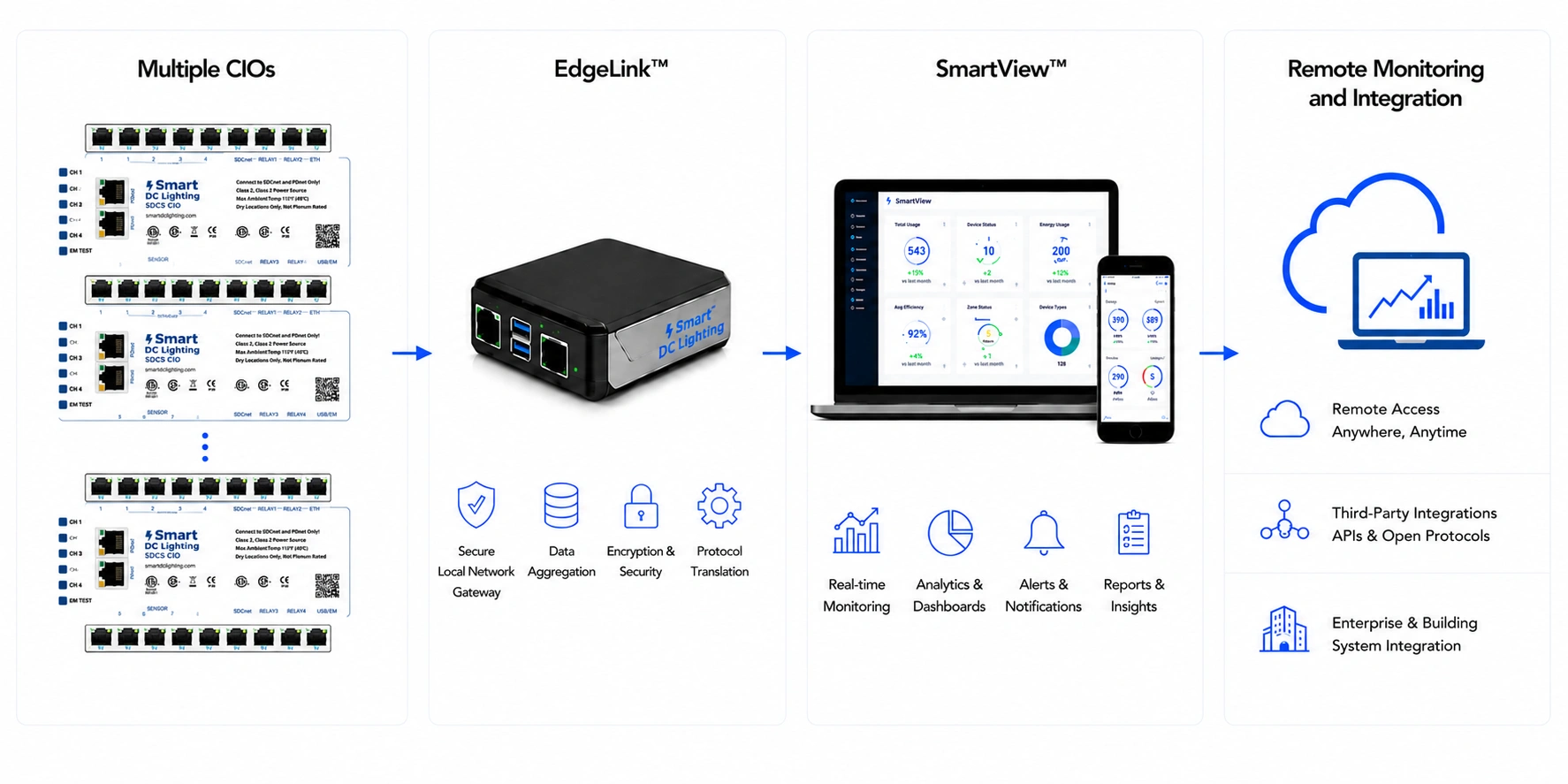
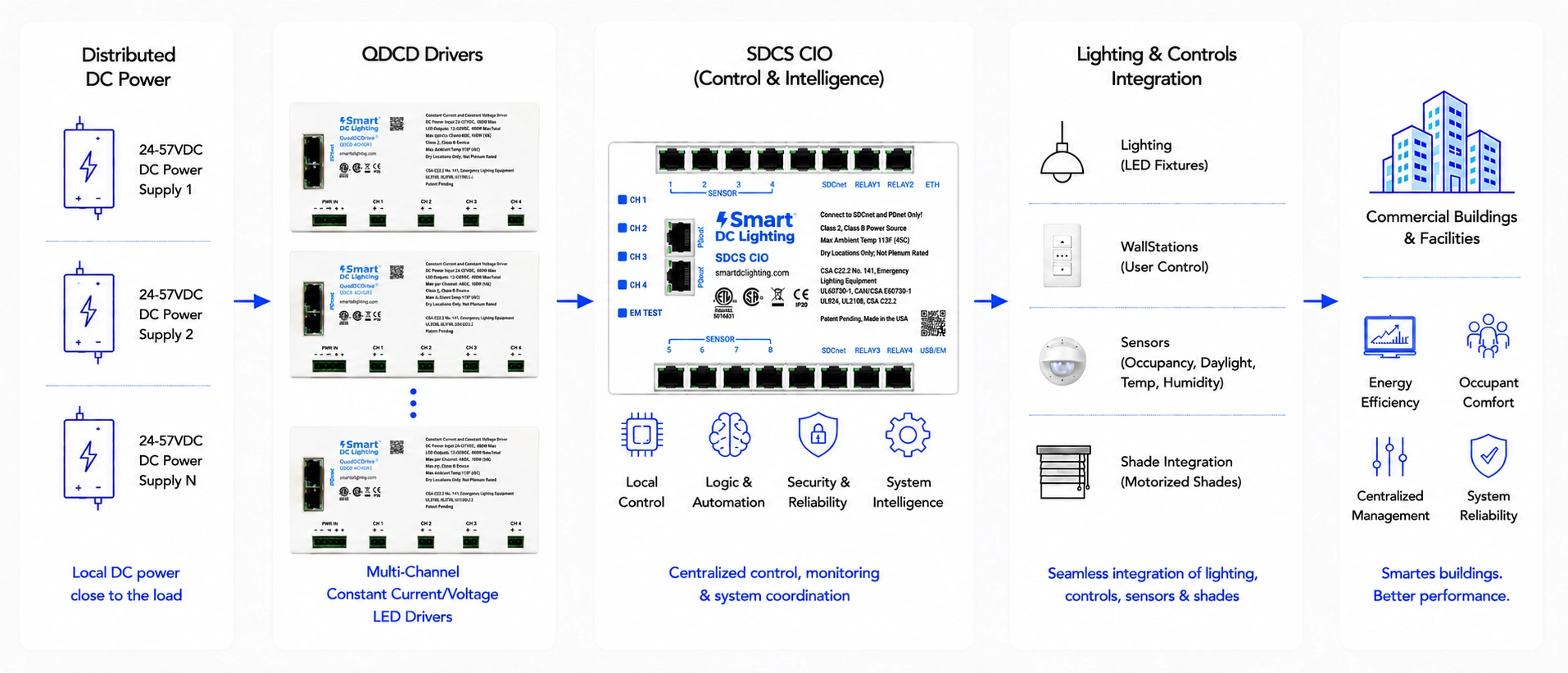
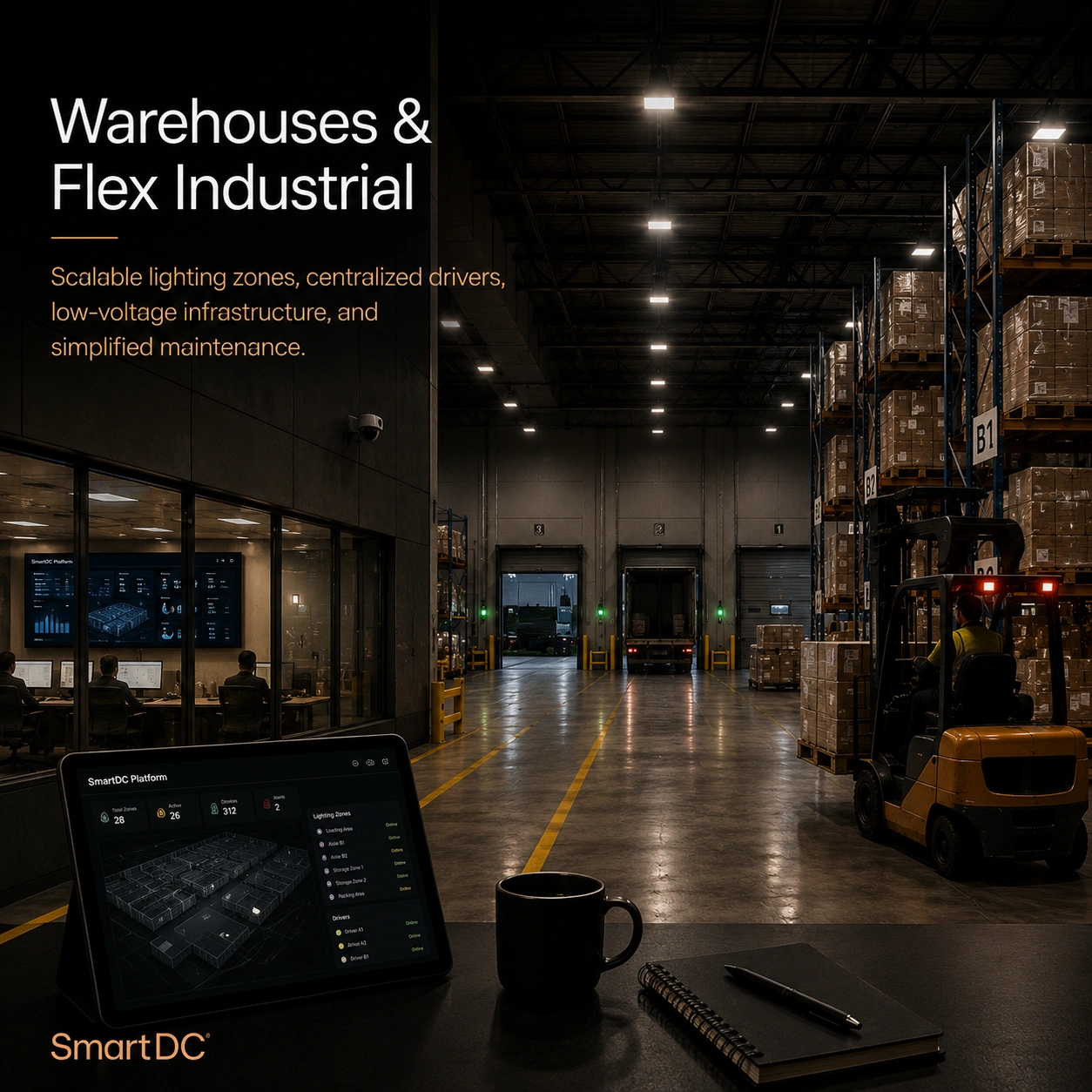
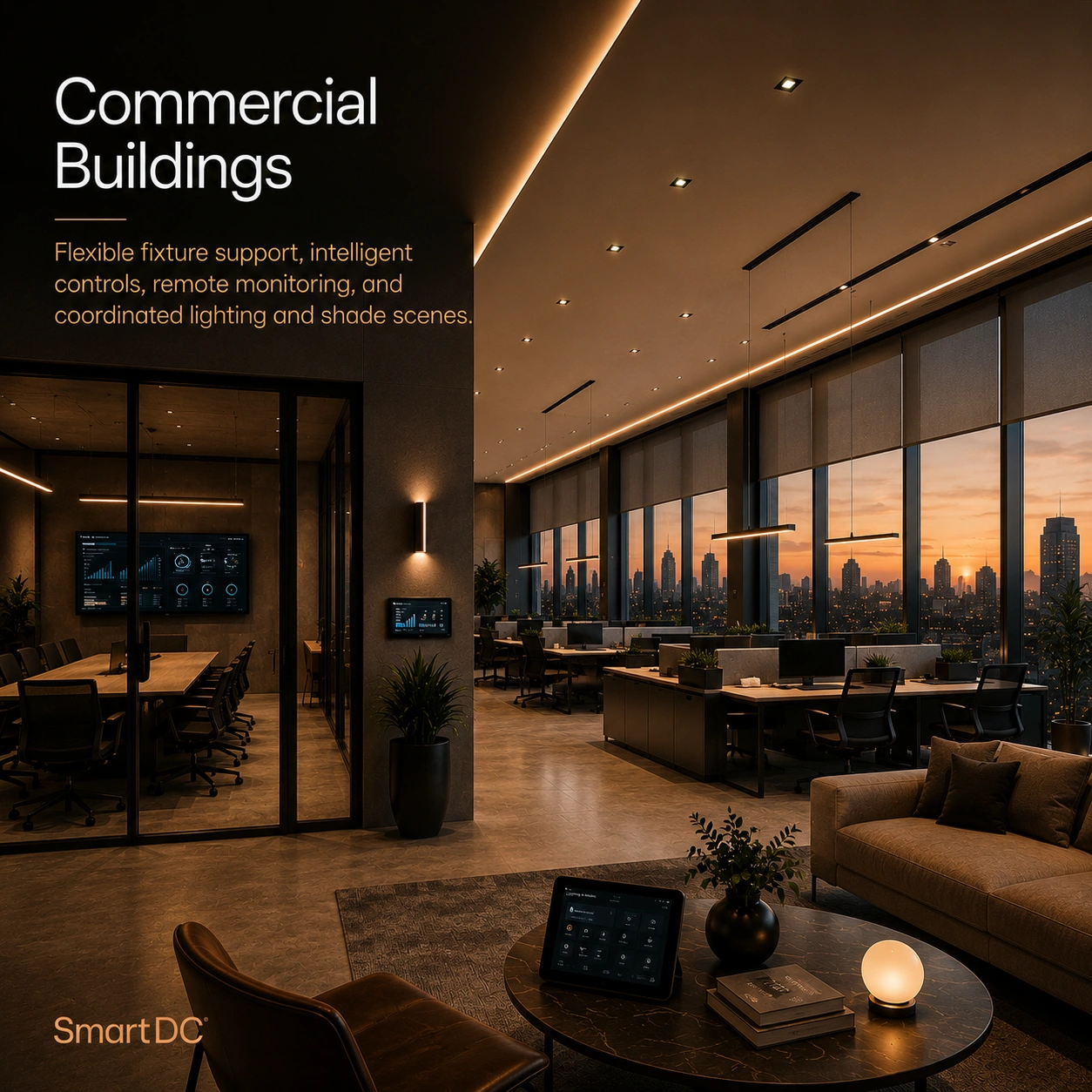
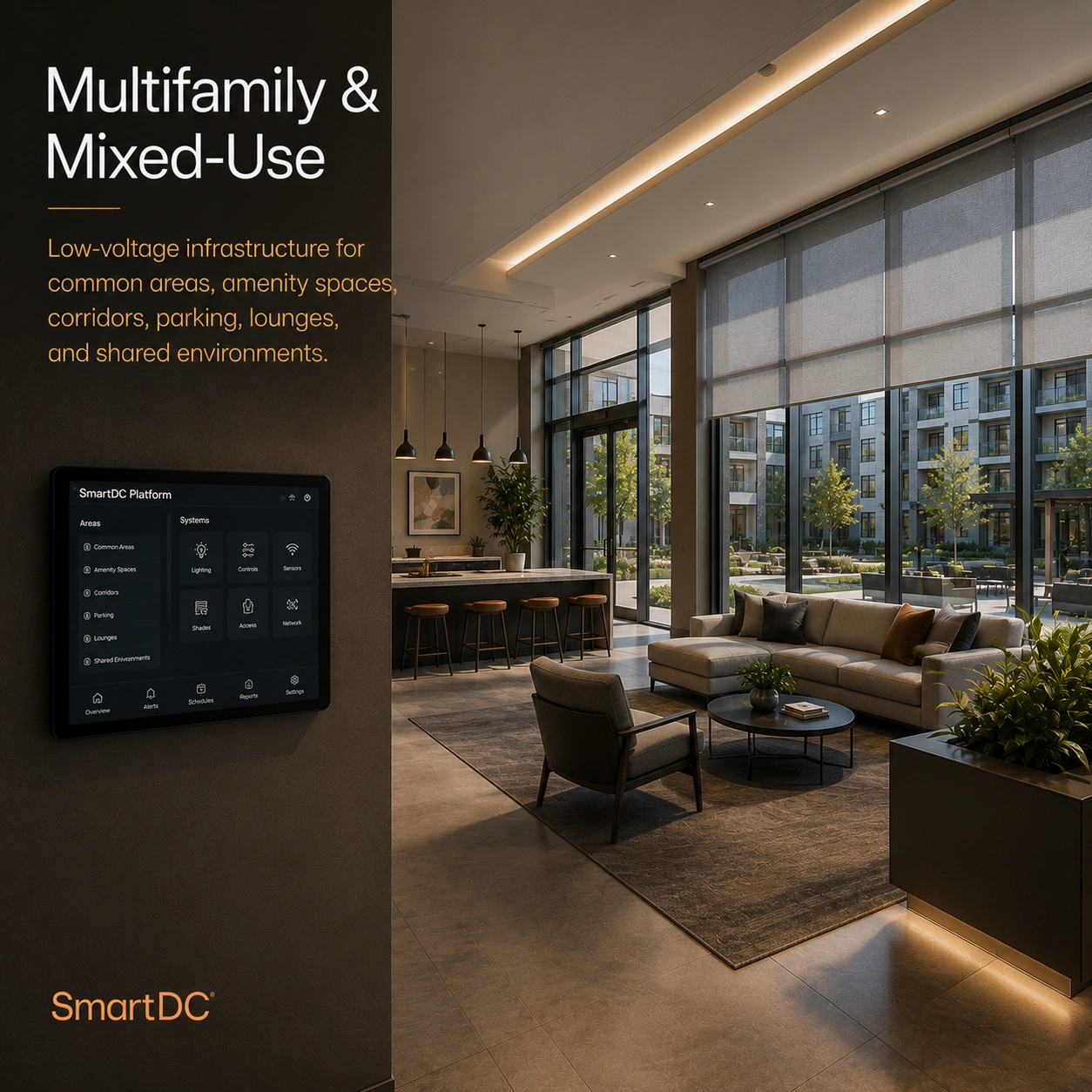
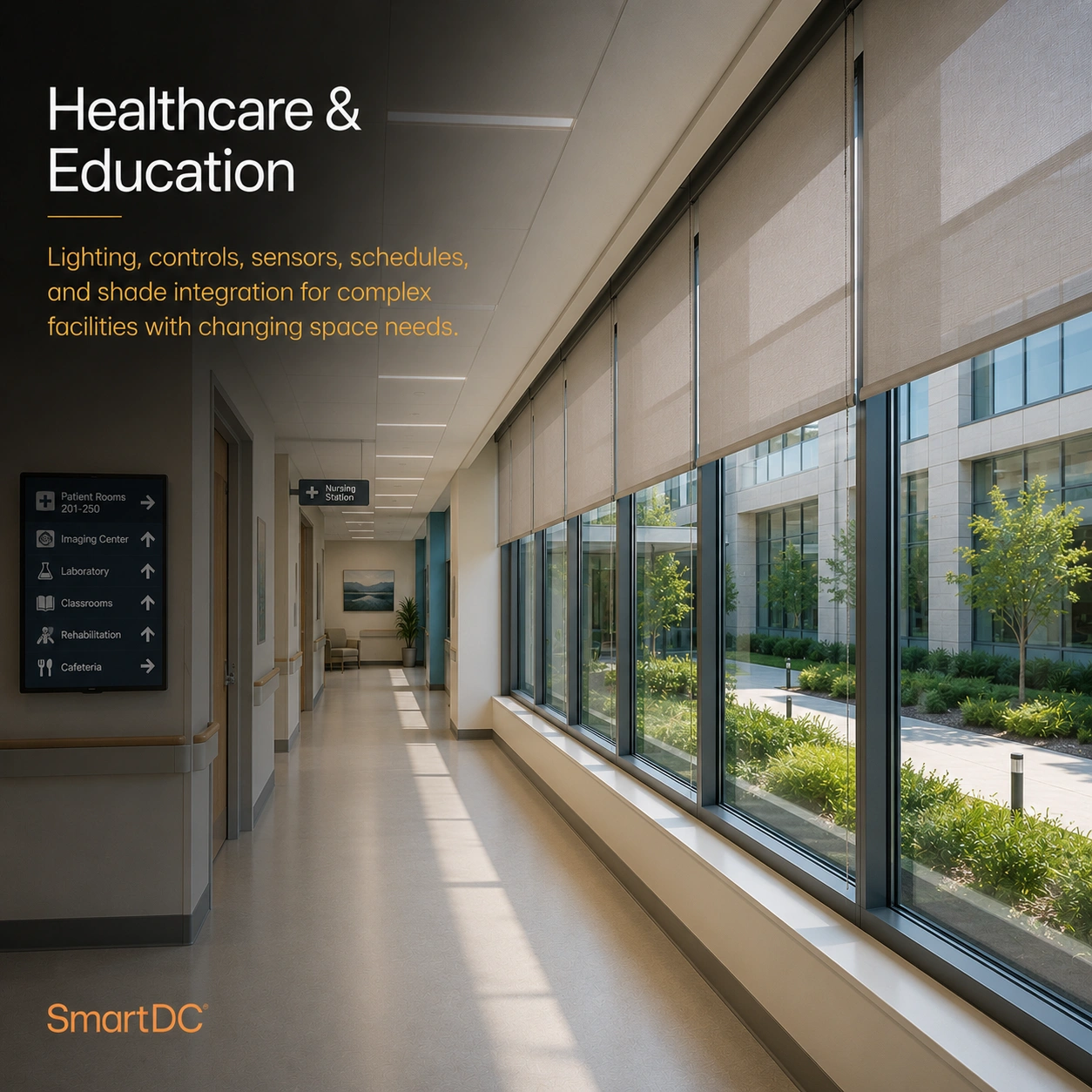
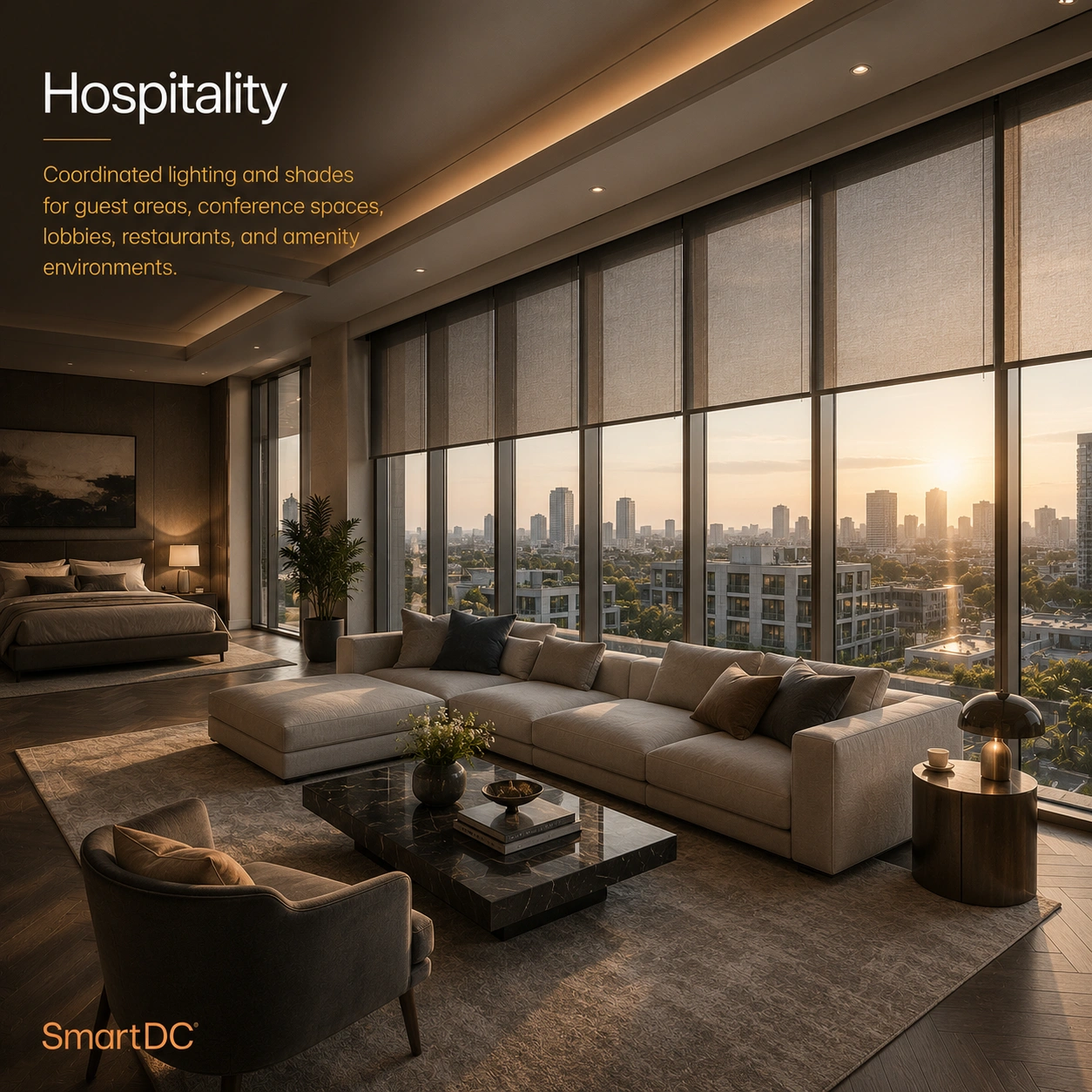
Local intelligence for lighting zones, scenes, schedules, sensors, WallStations, relays, contact closures, and motorized shades.
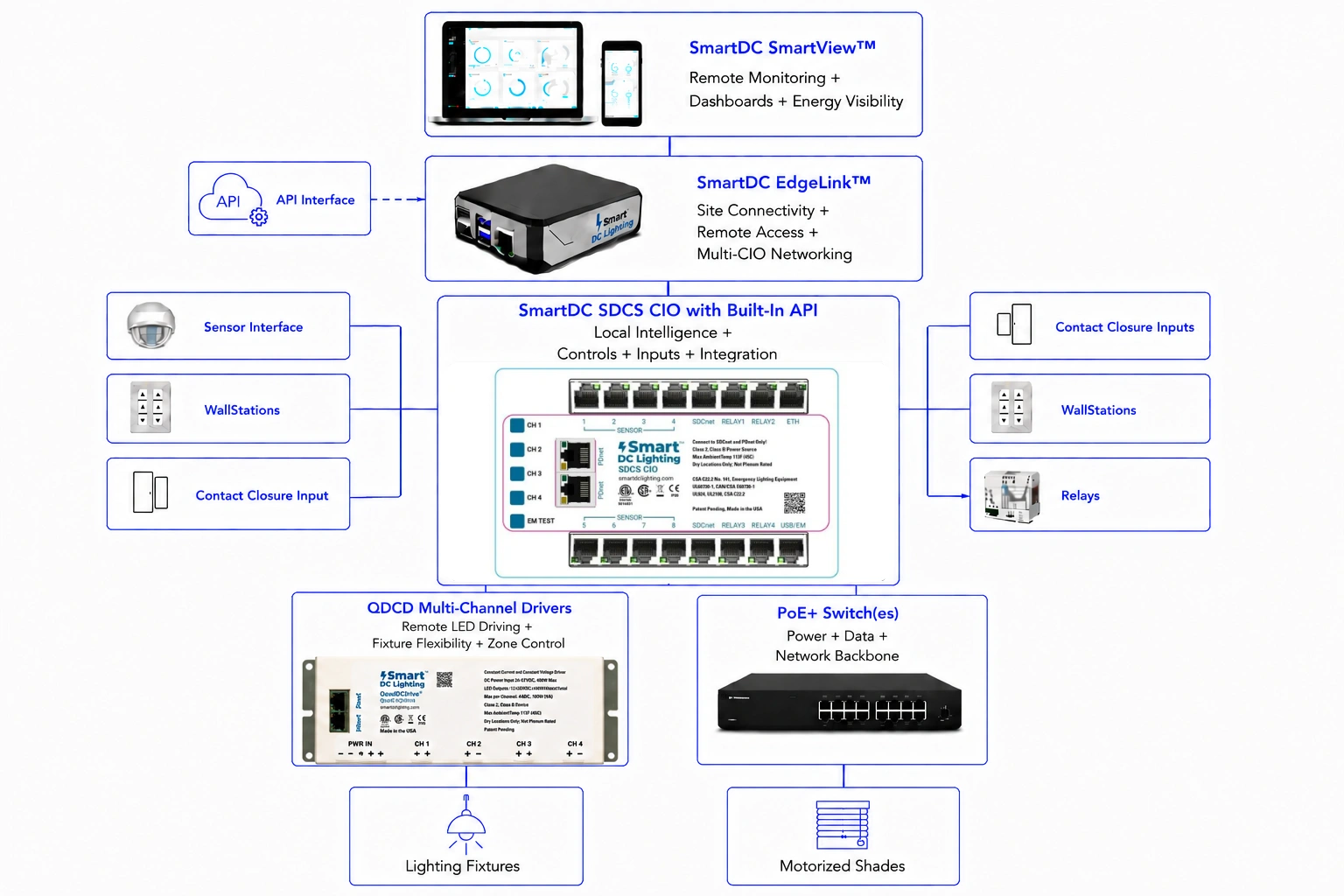
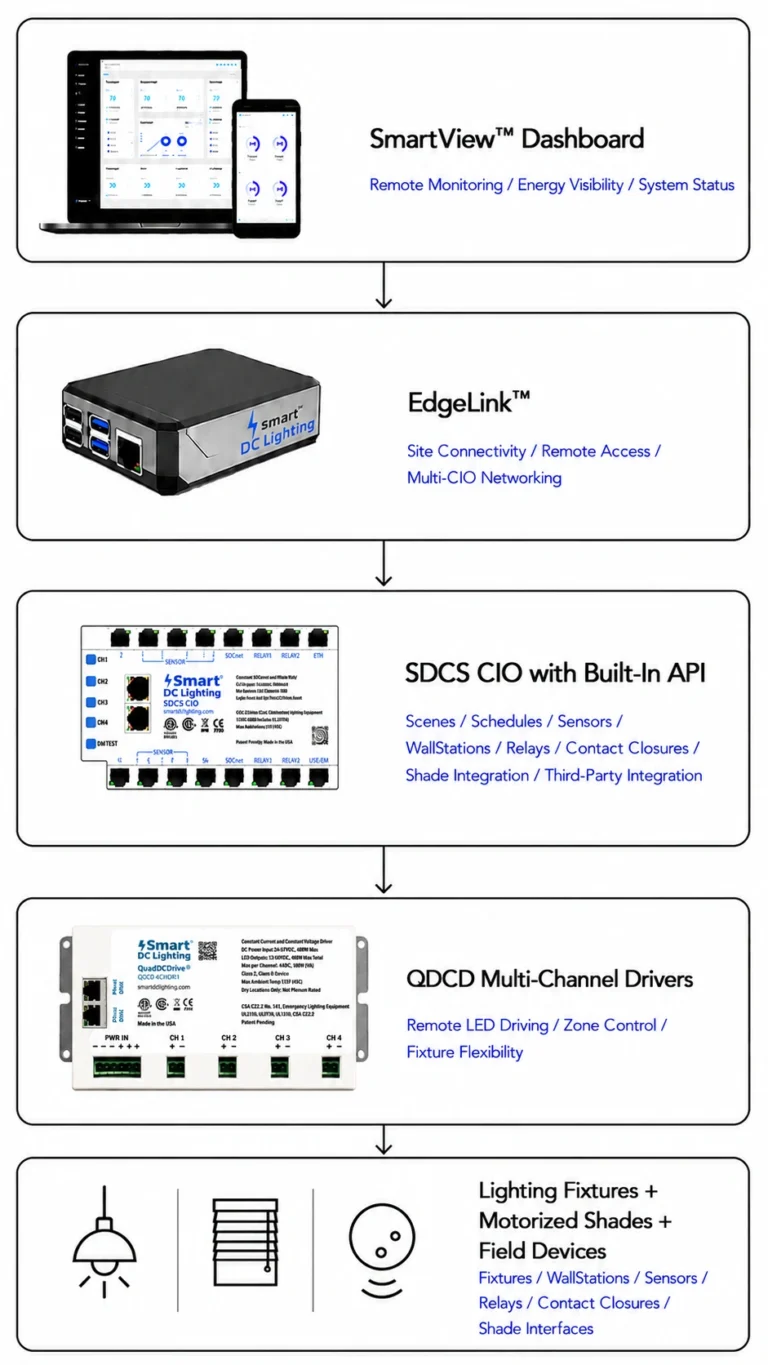
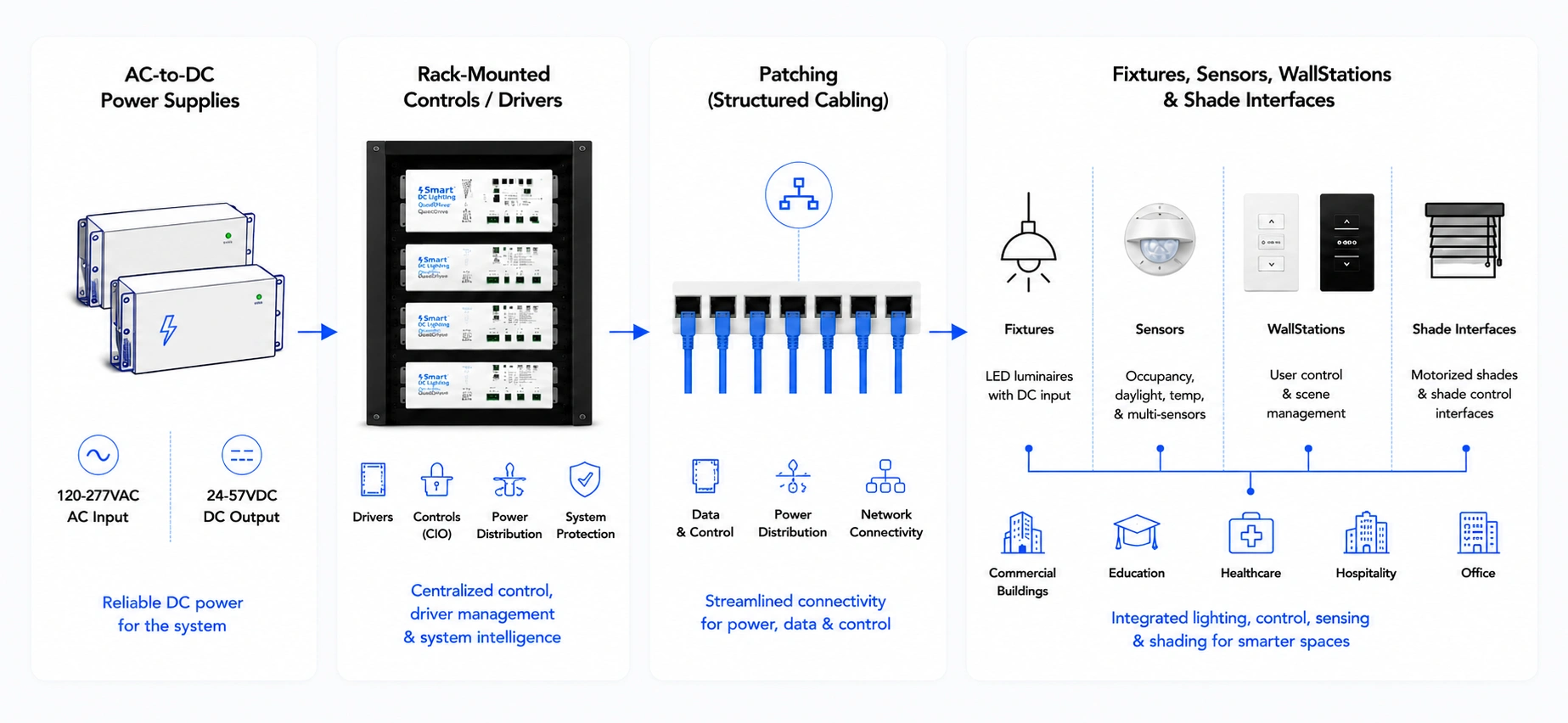
SmartDC organizes power, lighting, controls, shades, field devices, and software visibility into a scalable platform stack. Each layer is designed to work together while giving engineers, contractors, integrators, and building owners flexibility in how the system is deployed.
| Platform Stack Table | ||
|---|---|---|
| Layer | Platform Element | Purpose |
| Software Layer | SmartView™ | Remote monitoring, dashboards, energy visibility, system status, and service support |
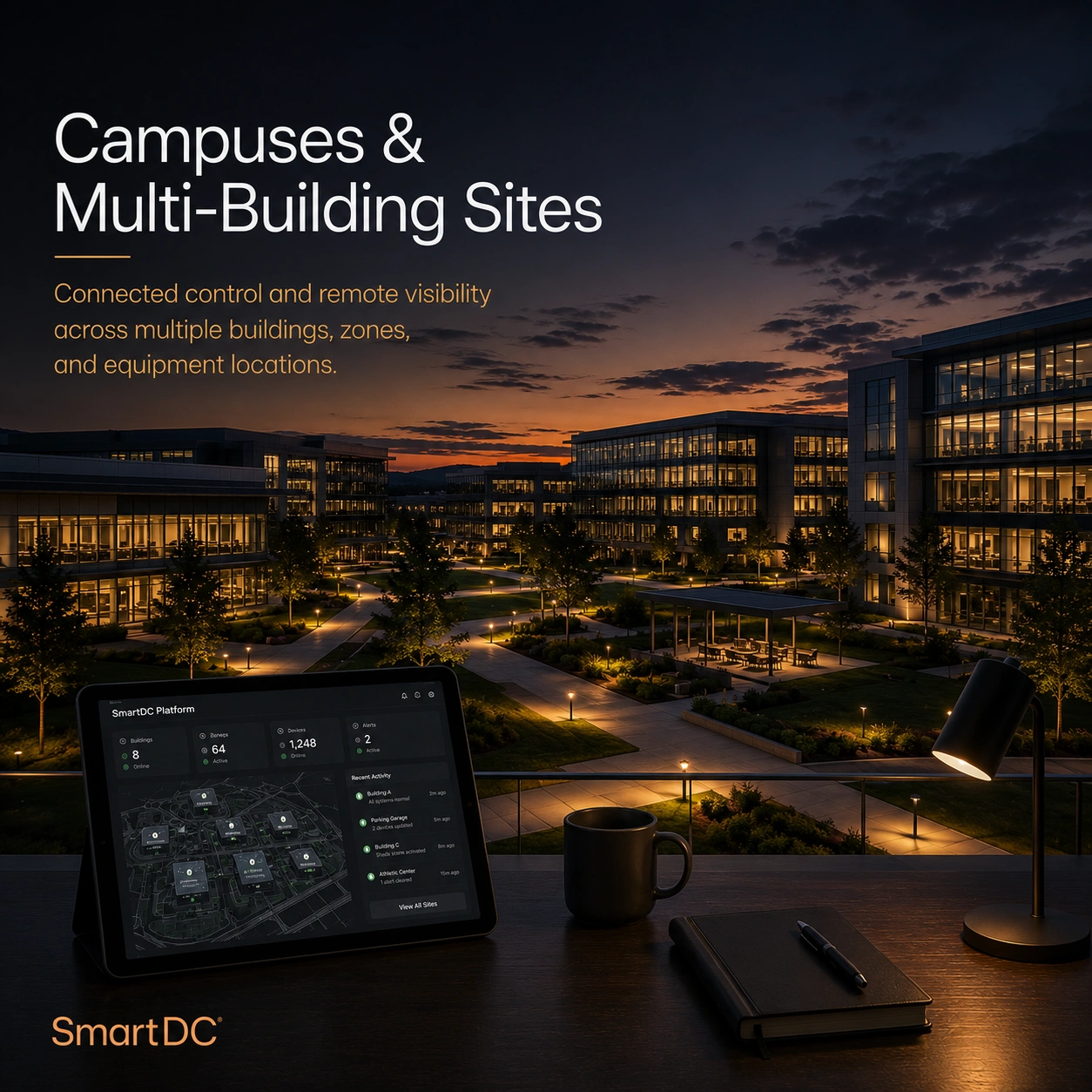
| Site Connectivity Layer | EdgeLink™ | Connects multiple CIOs across a site and enables remote access and site-level visibility |
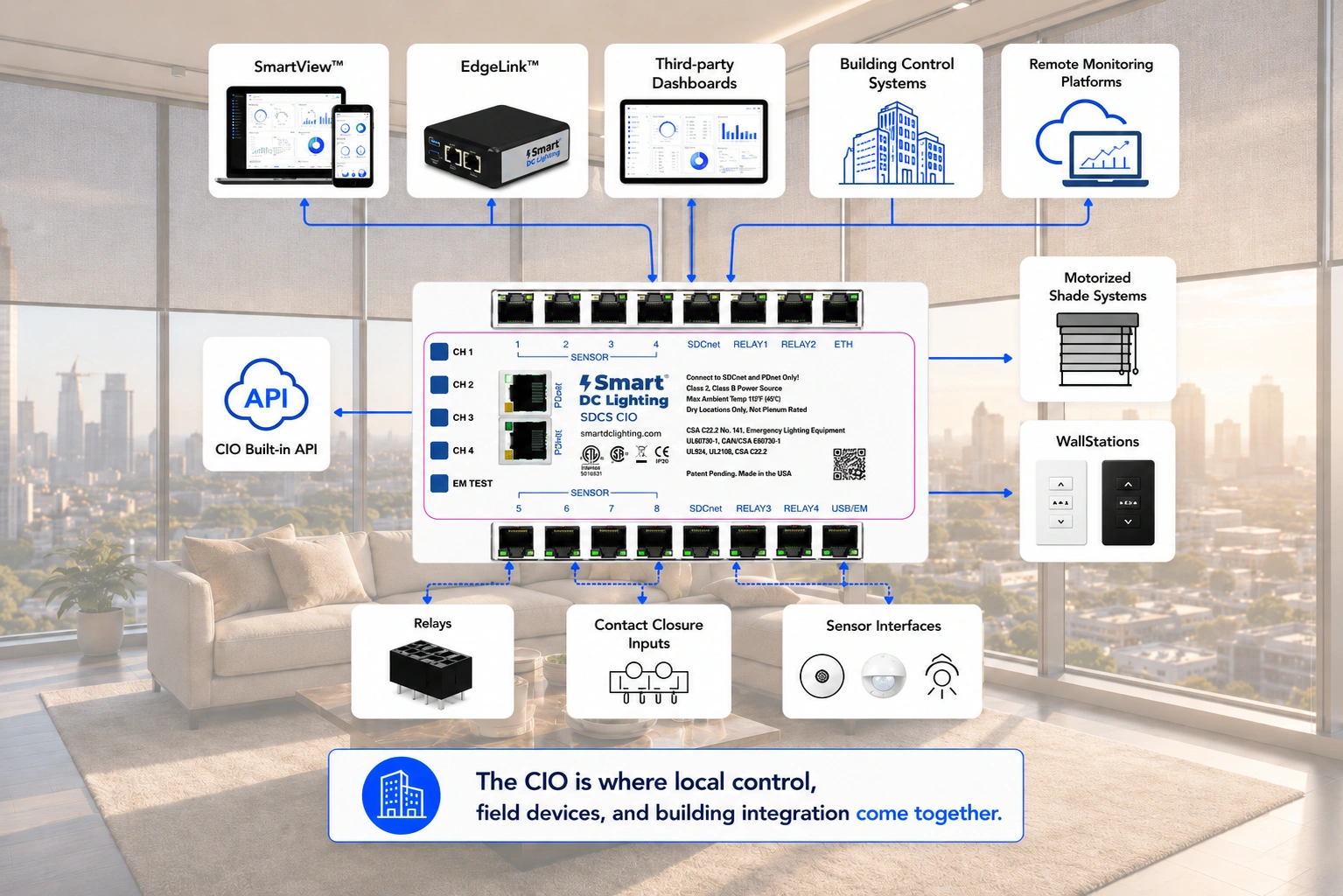
| Local Intelligence Layer | SDCS CIO with Built-In API | Local lighting control, scenes, schedules, sensors, WallStations, relays, contact closures, shade integration, and third-party connectivity |
| Driver Layer | QDCD Multi-Channel Drivers | Remote LED driving, fixture flexibility, zone control, and centralized serviceability |
| Network / Device Layer | PoE++ / Ethernet / Low-Voltage Bus | Connectivity for platform devices, interfaces, controllers, and networked components |
| Field Layer | Lighting Fixtures, Motorized Shades, Sensors, WallStations, Relays, Contact Closures | Space-level devices, user interaction, automation triggers, and responsive room behavior |

SmartDC connects software, site-level networking, local intelligence, remote drivers, lighting fixtures, motorized shades, sensors, WallStations, relays, and contact closures into one complete low-voltage DC platform.
At the center of the platform is the SDCS CIO, which provides local control and includes a built-in API for integration with SmartView™, EdgeLink™, third-party systems, dashboards, and building platforms.
| Lighting Infrastructure Comparison | ||
|---|---|---|
| Traditional Line Voltage | PoE Lighting | SmartDC Platform |
| Fixture-by-fixture AC wiring | Built around Ethernet switch ports | Built around lighting power and control |
| Driver electronics located in every fixture | Limited by available PoE power per port | Remote multi-channel drivers |
| Harder to centralize service | IT closet dependency | Centralized low-voltage infrastructure |
| Limited system visibility | Data-network focused | Lighting-infrastructure focused |
| More complex changes after install | Switch-port constrained | Scalable by zones, drivers, and CIOs |
| Separate lighting and shade systems | Shade control may require separate systems | Lighting and shade integration through the CIO |
| Integration often requires additional systems | Network-centric architecture | CIO includes built-in API for integration |