The Low-Voltage DC Platform for Lighting, Controls, Shades, and Smart Building Infrastructure

SmartDC brings DC power distribution, remote LED drivers, intelligent controls, sensors, motorized shade integration, local API connectivity, and remote visibility into one scalable platform for modern buildings

Built for commercial, industrial, multifamily, campus, and mixed-use environments, the SmartDC platform creates a connected infrastructure layer that is easier to install, easier to service, and easier to manage than traditional lighting and control systems.
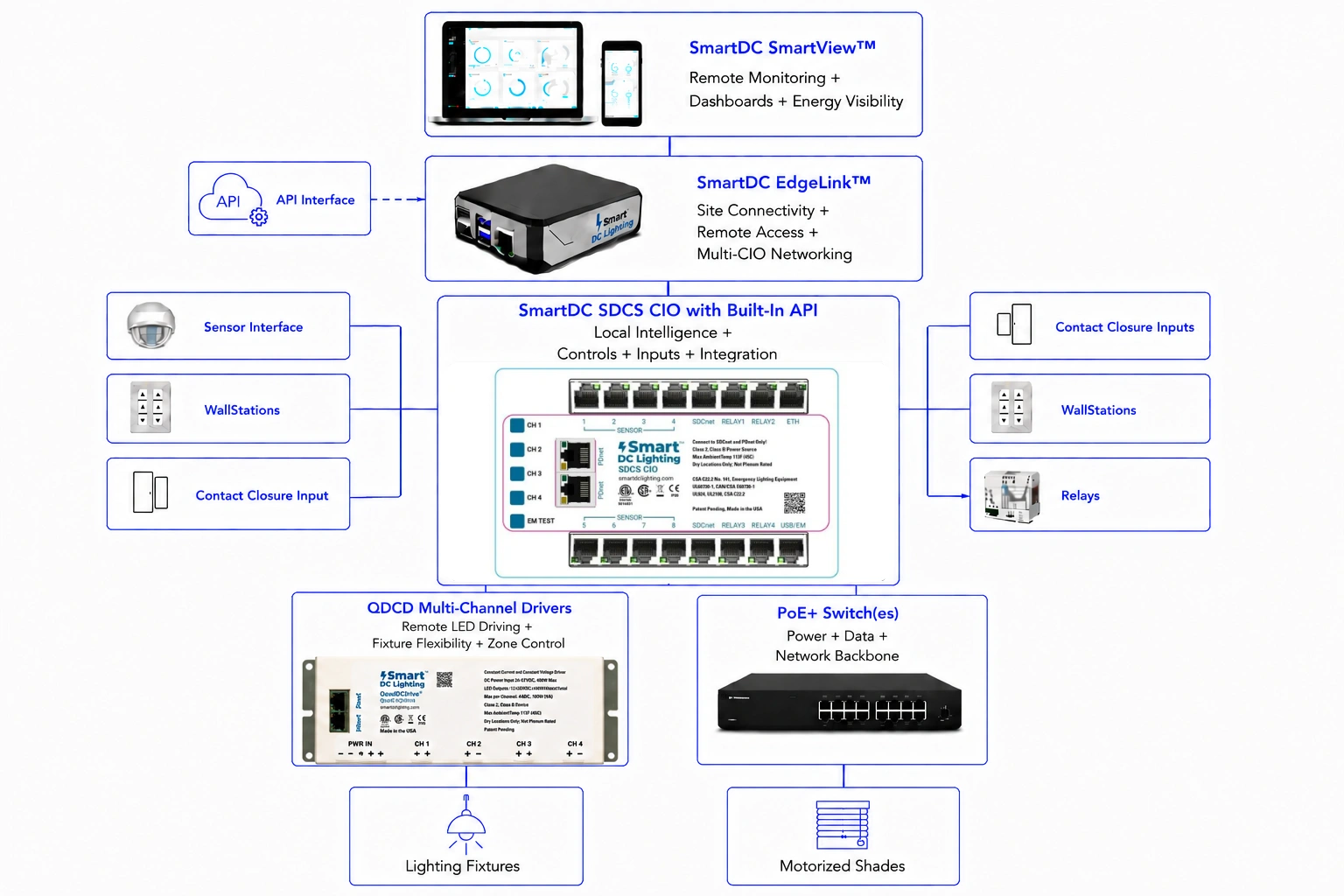
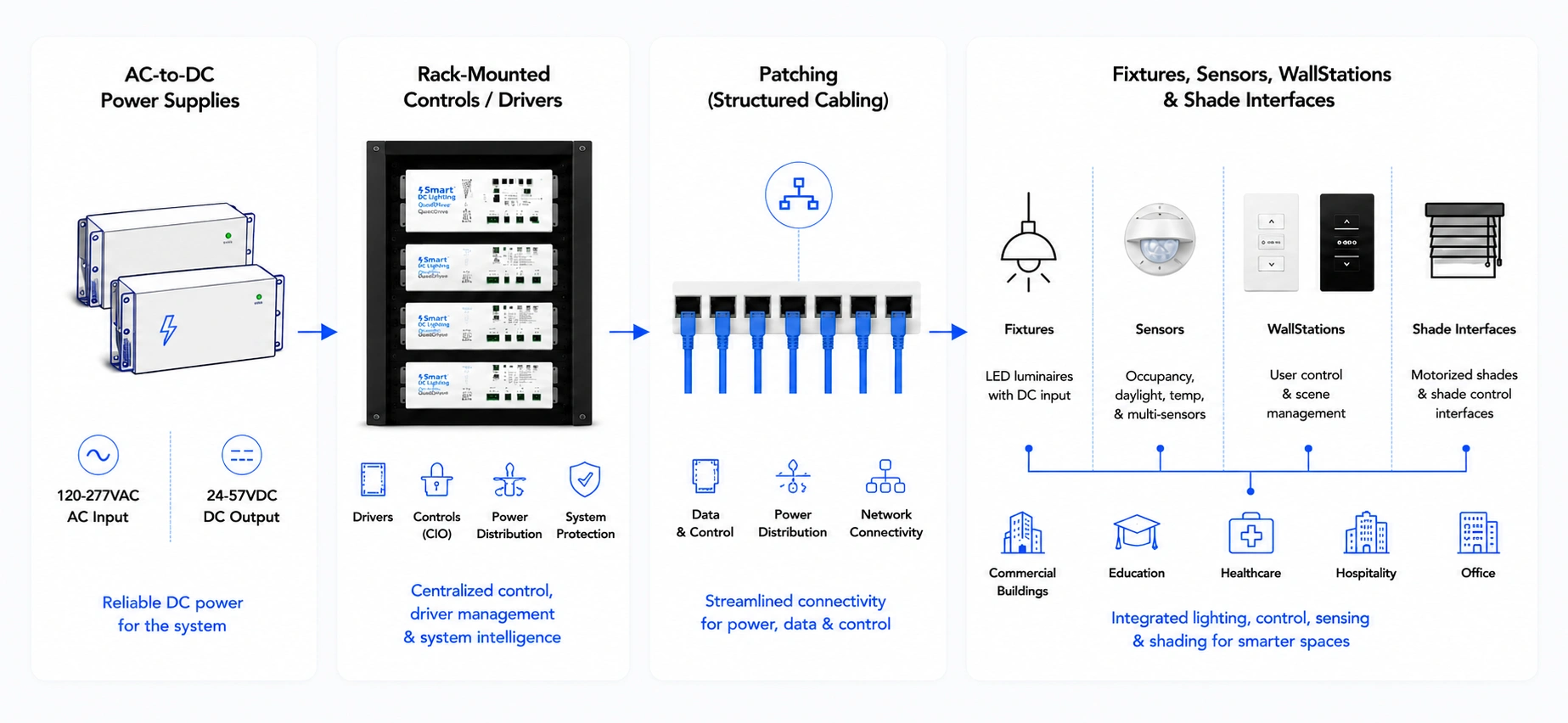
Architecture Diagram

One Connected Infrastructure Layer for the Modern Building

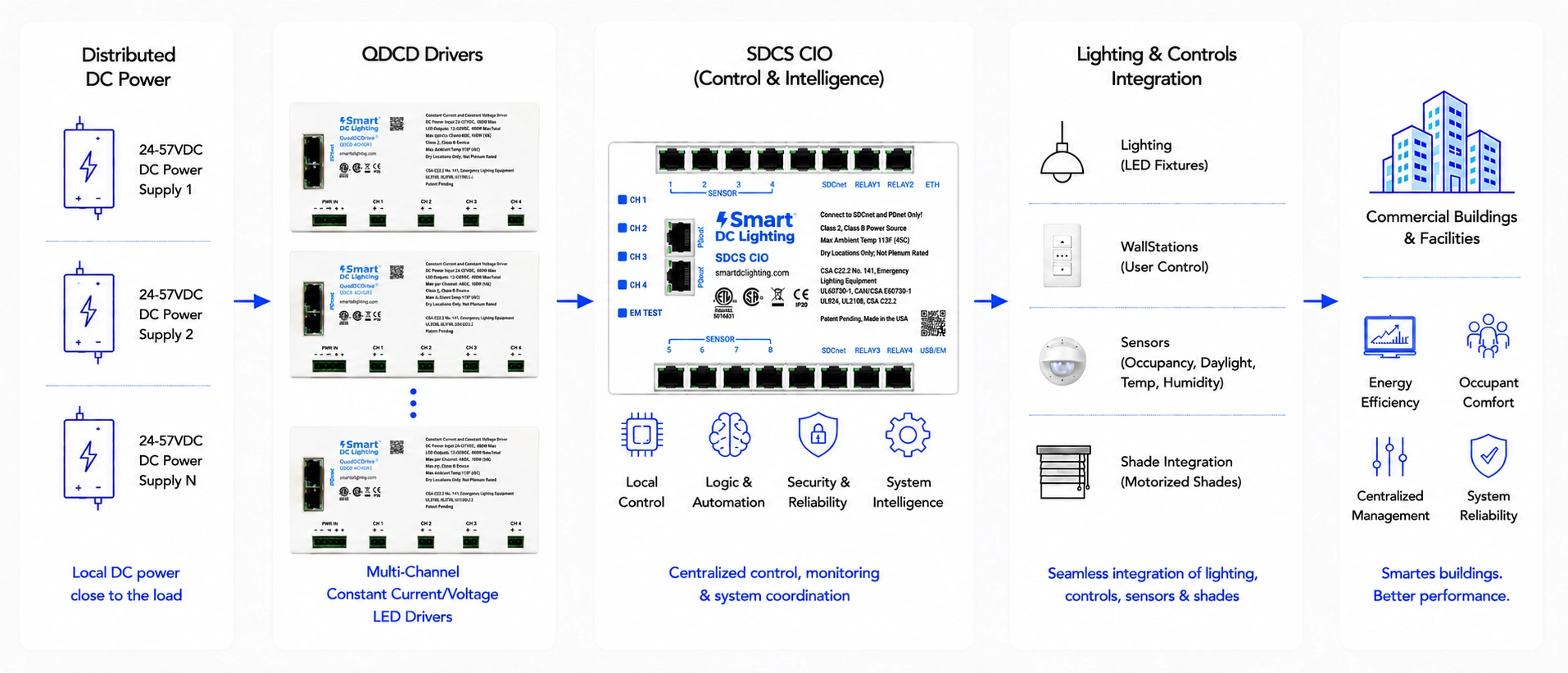
SmartDC transforms lighting and room control from a collection of isolated devices into one connected low-voltage DC infrastructure platform.

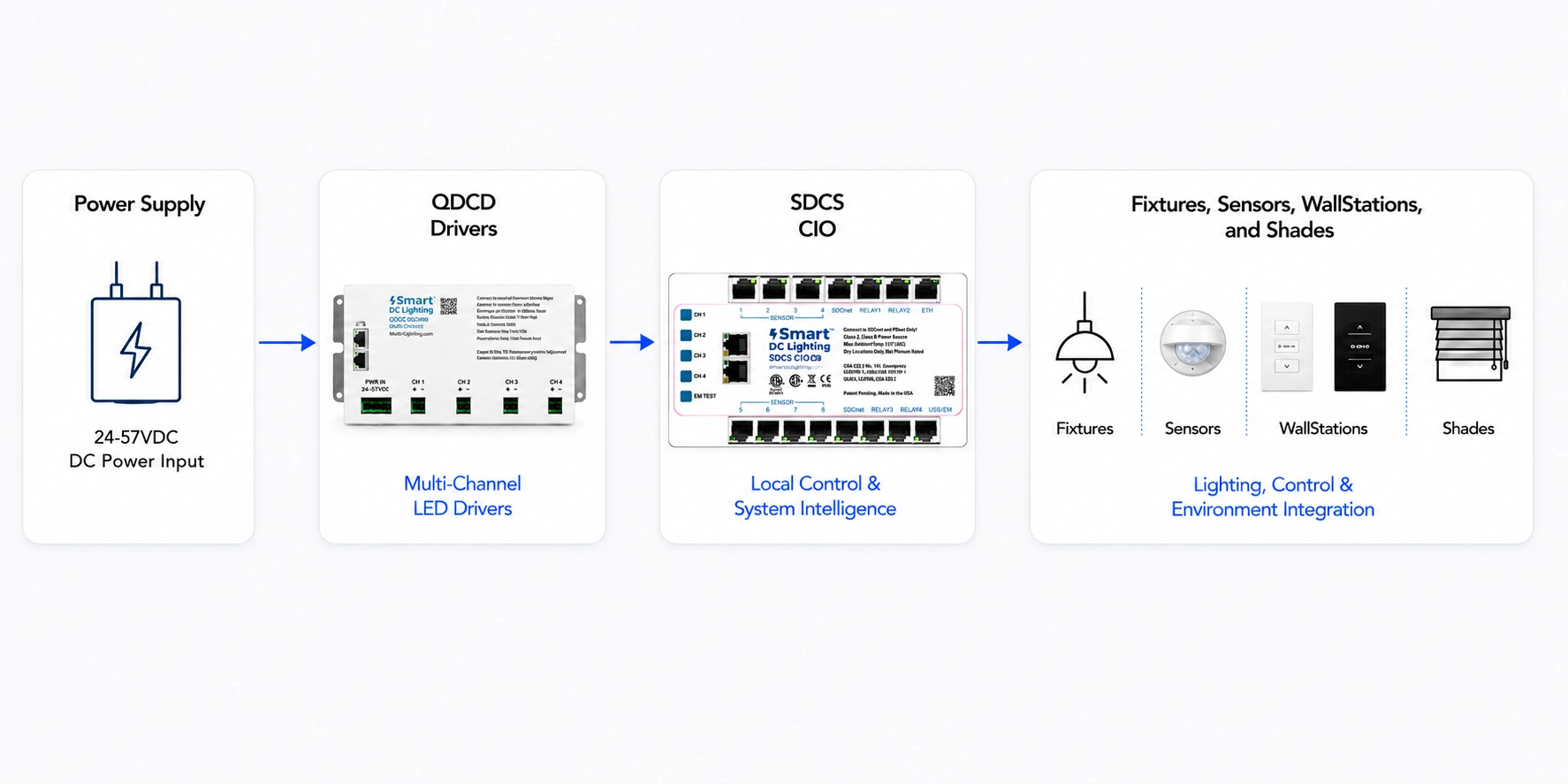
The platform combines DC power distribution, remote LED drivers, local control intelligence, sensors, WallStations, relays, contact closure inputs, motorized shade integration, CIO-based API connectivity, and remote system visibility.
Power
Low-voltage DC architecture designed specifically for lighting loads and connected building devices.
Control

Local intelligence for lighting zones, scenes, schedules, sensors, WallStations, relays, contact closures, and motorized shades.

Visibility
Remote system monitoring, device status, energy activity, and site-level connectivity through SmartView™ and EdgeLink™.

How the SmartDC Platform Works

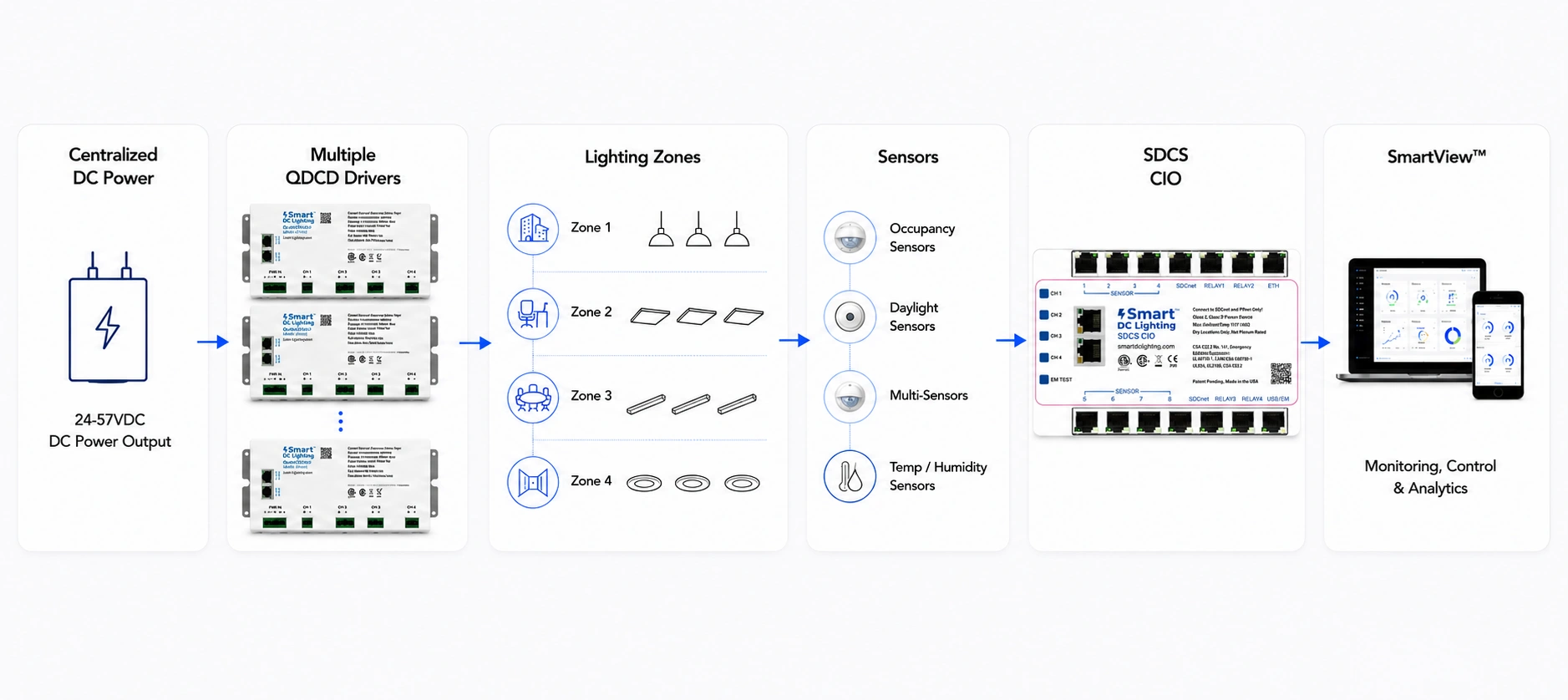
SmartDC organizes power, lighting, controls, shades, field devices, and software visibility into a scalable platform stack. Each layer is designed to work together while giving engineers, contractors, integrators, and building owners flexibility in how the system is deployed.

Platform Stack Table
Layer Platform Element Purpose
Software Layer SmartView™ Remote monitoring, dashboards, energy visibility, system status, and service support
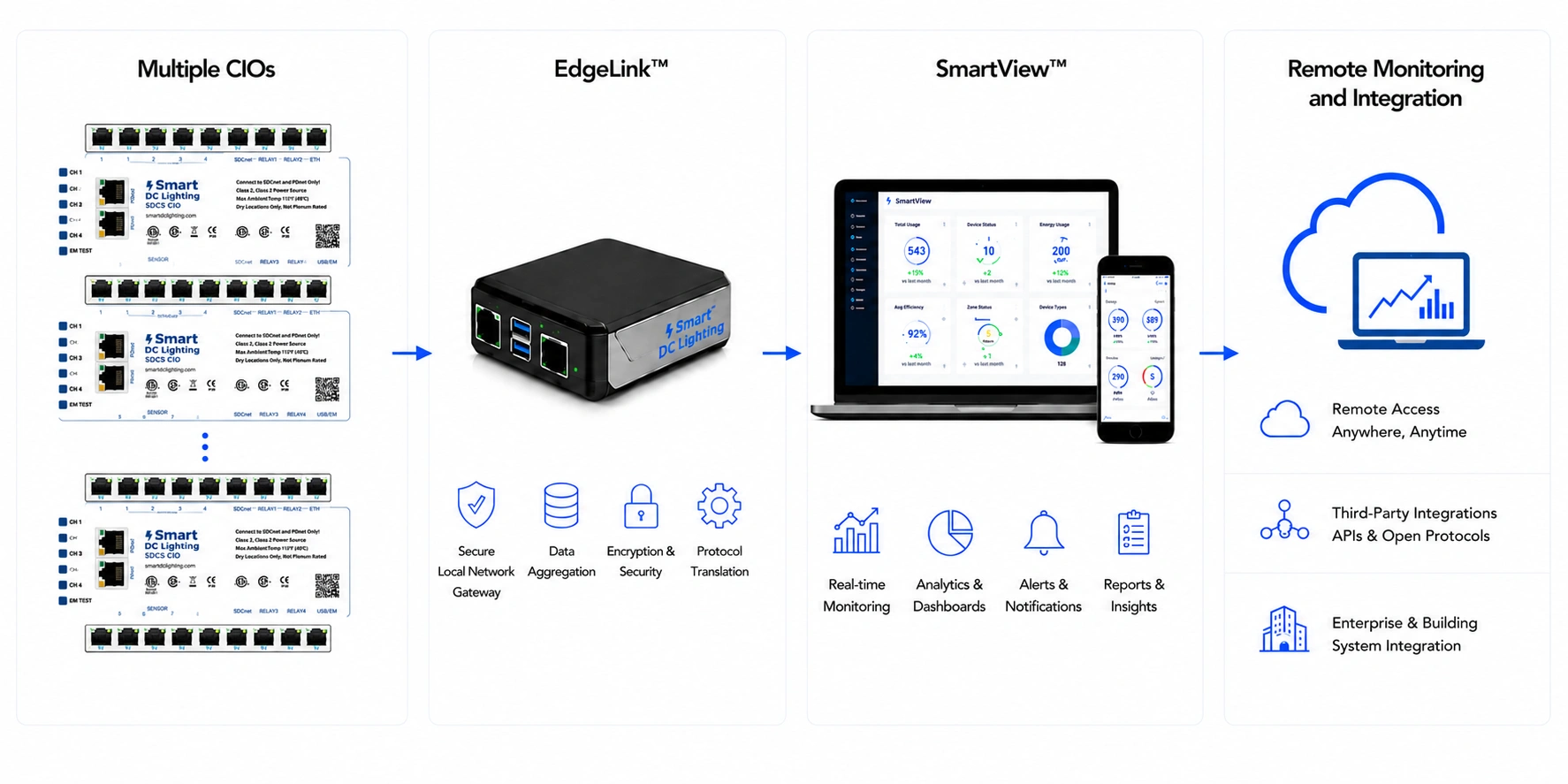
Site Connectivity Layer EdgeLink™ Connects multiple CIOs across a site and enables remote access and site-level visibility
Local Intelligence Layer SDCS CIO with Built-In API Local lighting control, scenes, schedules, sensors, WallStations, relays, contact closures, shade integration, and third-party connectivity
Driver Layer QDCD Multi-Channel Drivers Remote LED driving, fixture flexibility, zone control, and centralized serviceability
Network / Device Layer PoE++ / Ethernet / Low-Voltage Bus Connectivity for platform devices, interfaces, controllers, and networked components
Field Layer Lighting Fixtures, Motorized Shades, Sensors, WallStations, Relays, Contact Closures Space-level devices, user interaction, automation triggers, and responsive room behavior

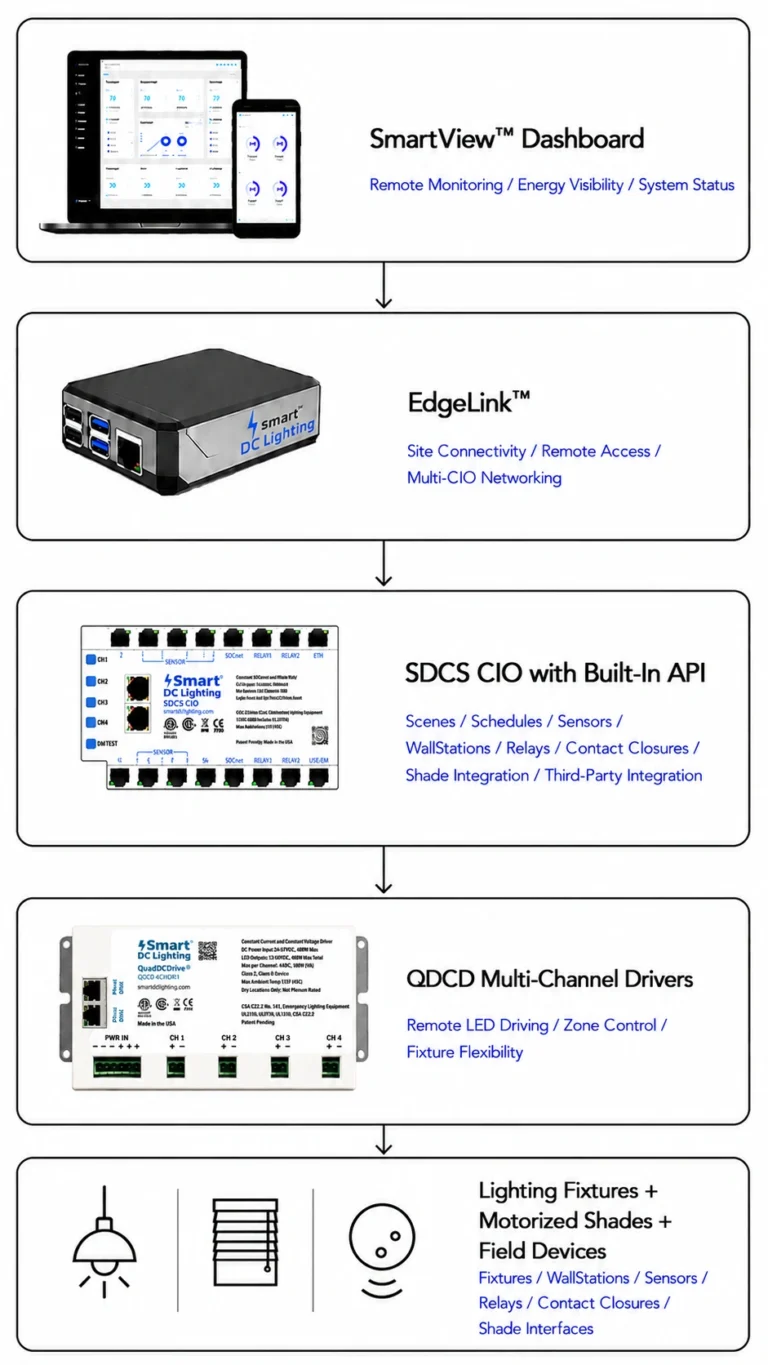
From the Dashboard to the Device

SmartDC connects software, site-level networking, local intelligence, remote drivers, lighting fixtures, motorized shades, sensors, WallStations, relays, and contact closures into one complete low-voltage DC platform.

At the center of the platform is the SDCS CIO, which provides local control and includes a built-in API for integration with SmartView™, EdgeLink™, third-party systems, dashboards, and building platforms.

From the Dashboard to the Device

Core Platform Components

SmartView™

Remote System Visibility
SmartView™ provides centralized visibility into system status, connected devices, schedules, energy activity, and overall lighting system health.

Use SmartView™ for:
  • Remote monitoring
  • Energy visibility
  • Device status
  • System health
  • Service support
  • Multi-site oversight

EdgeLink™

Site-Level Connectivity
EdgeLink™ connects multiple SmartDC CIOs across a site and enables remote access, monitoring, and broader system connectivity.

Use EdgeLink™ for:
  • Multi-CIO networking
  • Site-level connectivity
  • Remote access
  • Remote monitoring
  • Campus deployments
  • Multi-building deployments

SDCS CIO with Built-In API

Local Intelligence and Integration
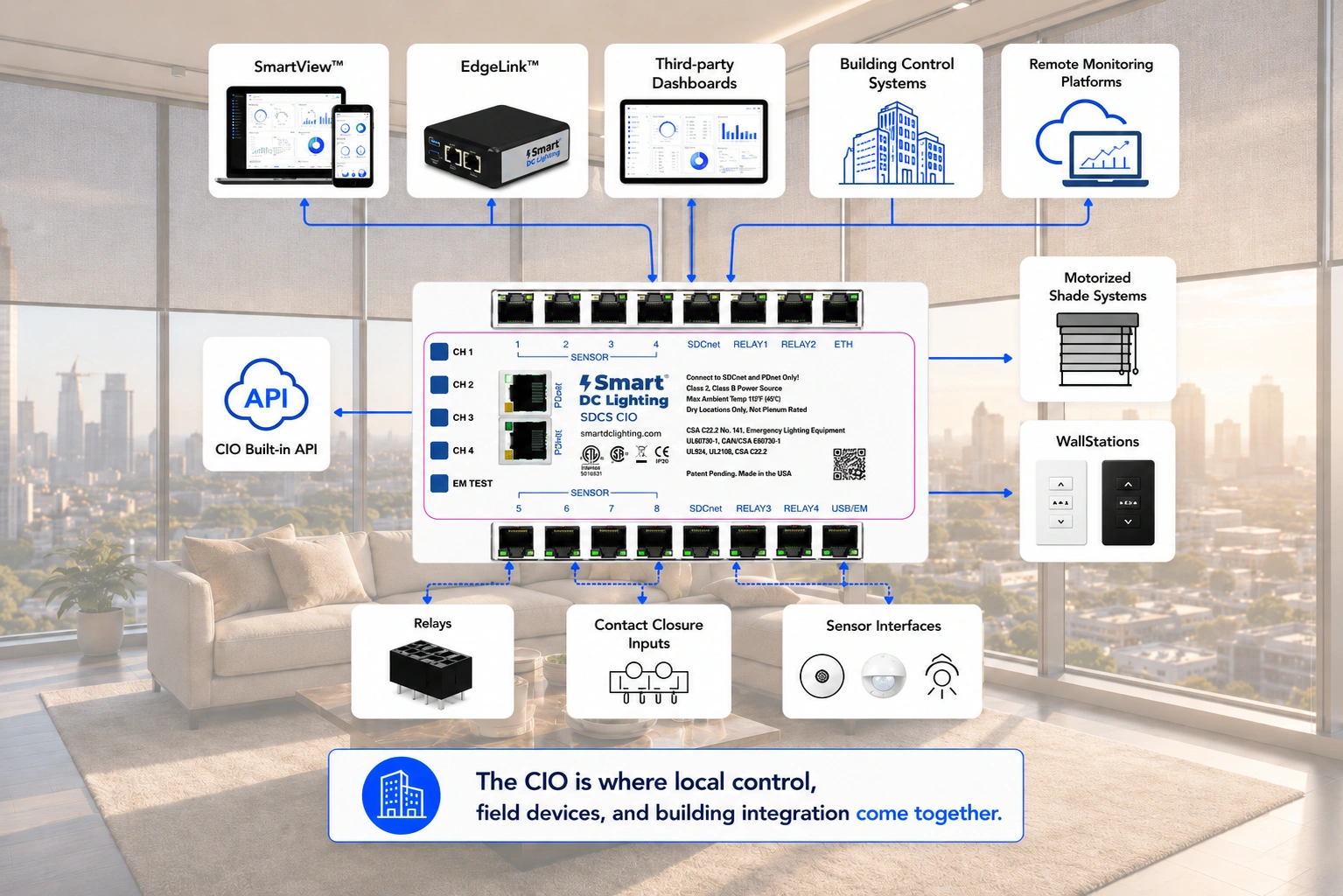
The SDCS CIO is the local intelligence hub of the SmartDC platform. It connects QDCD drivers, sensors, WallStations, relays, contact closure inputs, motorized shade interfaces, and other low-voltage control devices.
The CIO includes a built-in API that allows SmartDC to communicate with SmartView™, EdgeLink™, third-party systems, dashboards, remote monitoring platforms, and building control systems.

Use the CIO for:
  • Lighting zones
  • Scene control
  • Scheduling
  • WallStation control
  • Relay outputs
  • Contact closure inputs
  • Motorized shade integration
  • API-based control
  • API-based monitoring
  • Third-party system integration

QDCD Multi-Channel Drivers

Remote LED Driver Platform
QDCD multi-channel drivers move LED driver intelligence out of the fixture and into an accessible low-voltage infrastructure layer. This improves fixture flexibility, simplifies service, and supports scalable lighting zones.

Use QDCD drivers for:
  • Remote LED driving
  • Multi-channel lighting control
  • Fixture flexibility
  • Centralized maintenance
  • Low-voltage DC distribution
  • Zone-based lighting control

EdgeLink™

Site-Level Connectivity
EdgeLink™ connects multiple SmartDC CIOs across a site and enables remote access, monitoring, and broader system connectivity.

Use EdgeLink™ for:
  • Multi-CIO networking
  • Site-level connectivity
  • Remote access
  • Remote monitoring
  • Campus deployments
  • Multi-building deployments

Sensors and Field Devices

Responsive Building Control
SmartDC supports the field devices needed to make spaces responsive, controllable, and automated.

Supported device types include:
  • WallStations
  • Sensor interfaces
  • Occupancy sensors
  • Daylight sensors
  • Contact closure inputs
  • Relay outputs
  • Door contacts
  • Third-party triggers
  • Motorized shade interfaces

Coordinated Lighting
and Shade Control

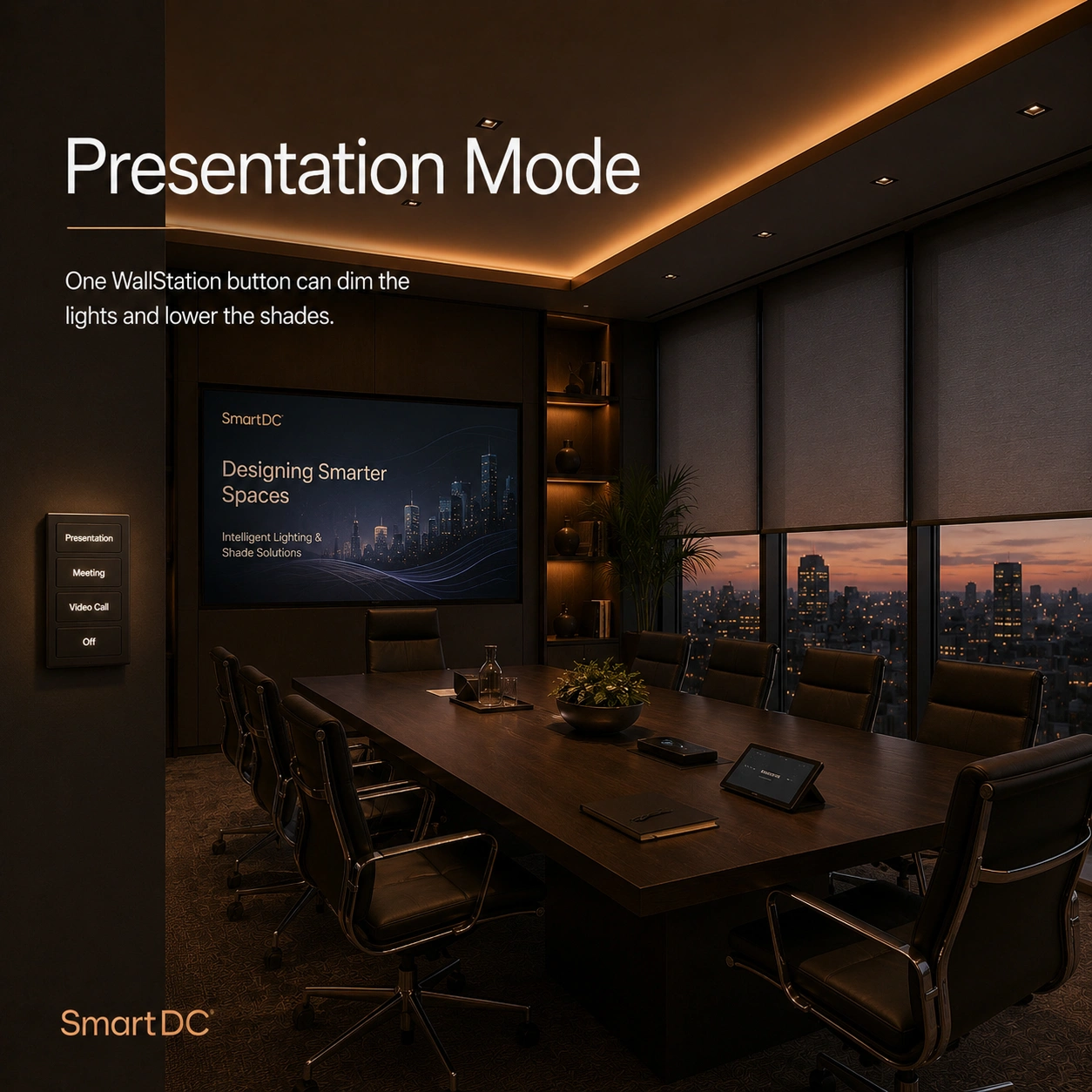
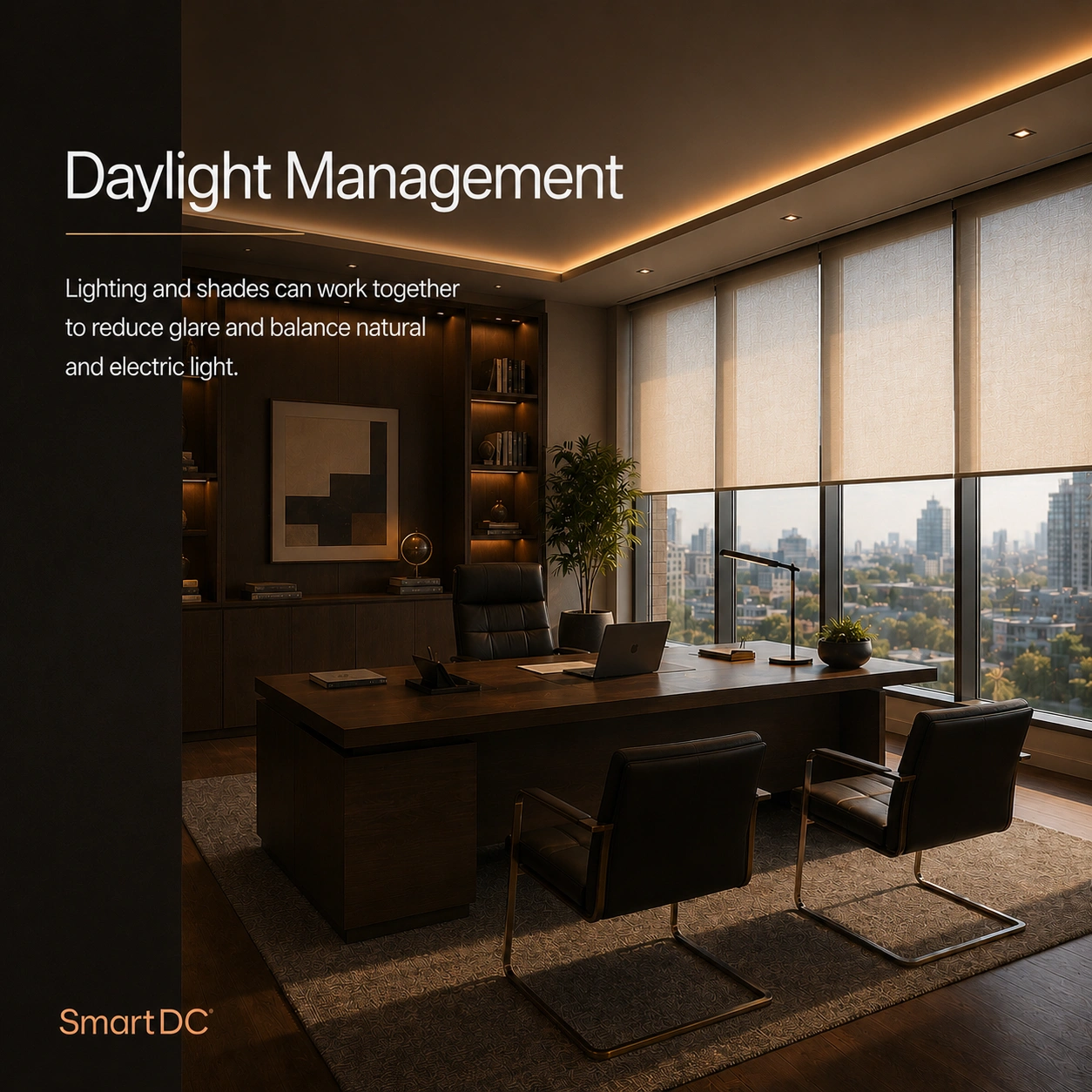
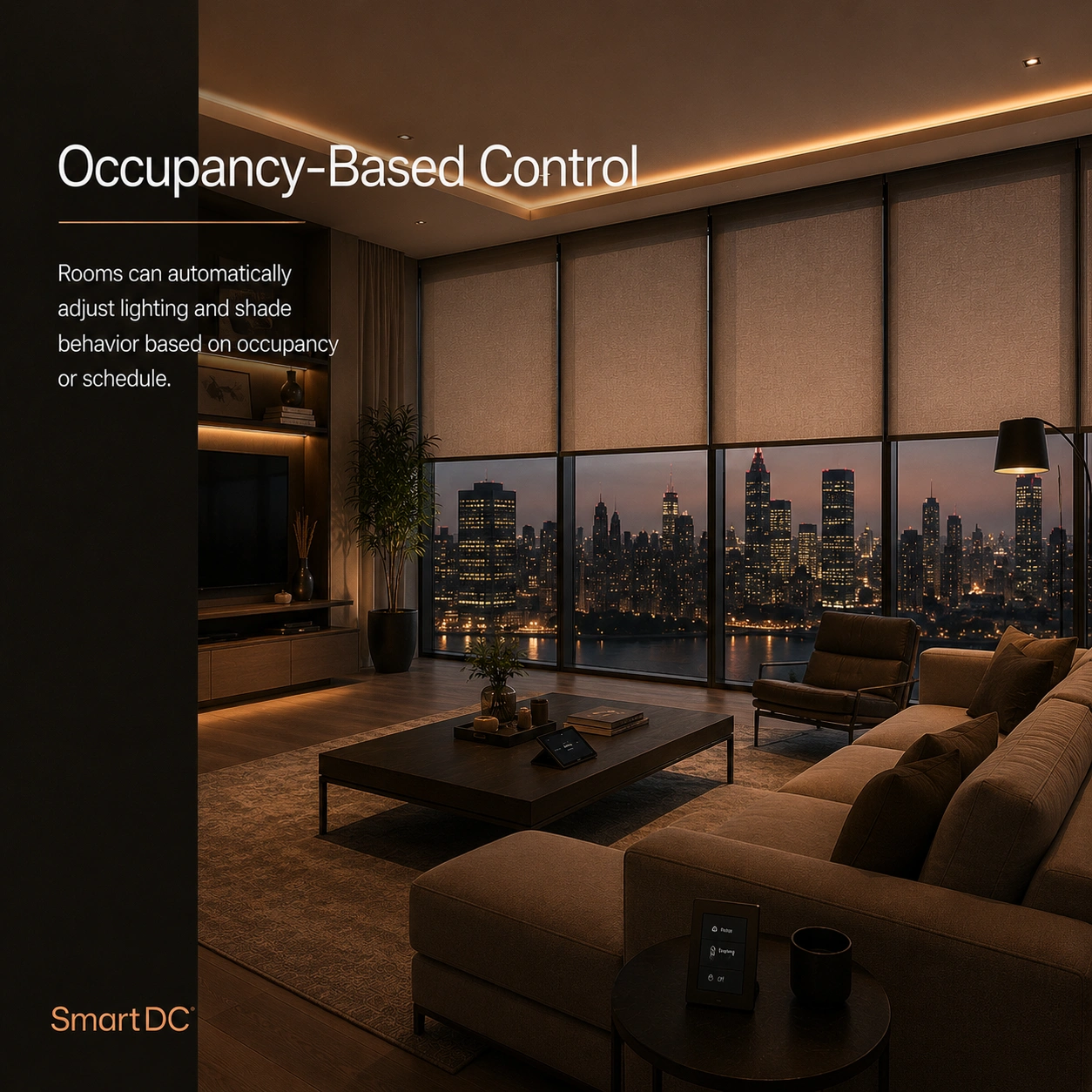
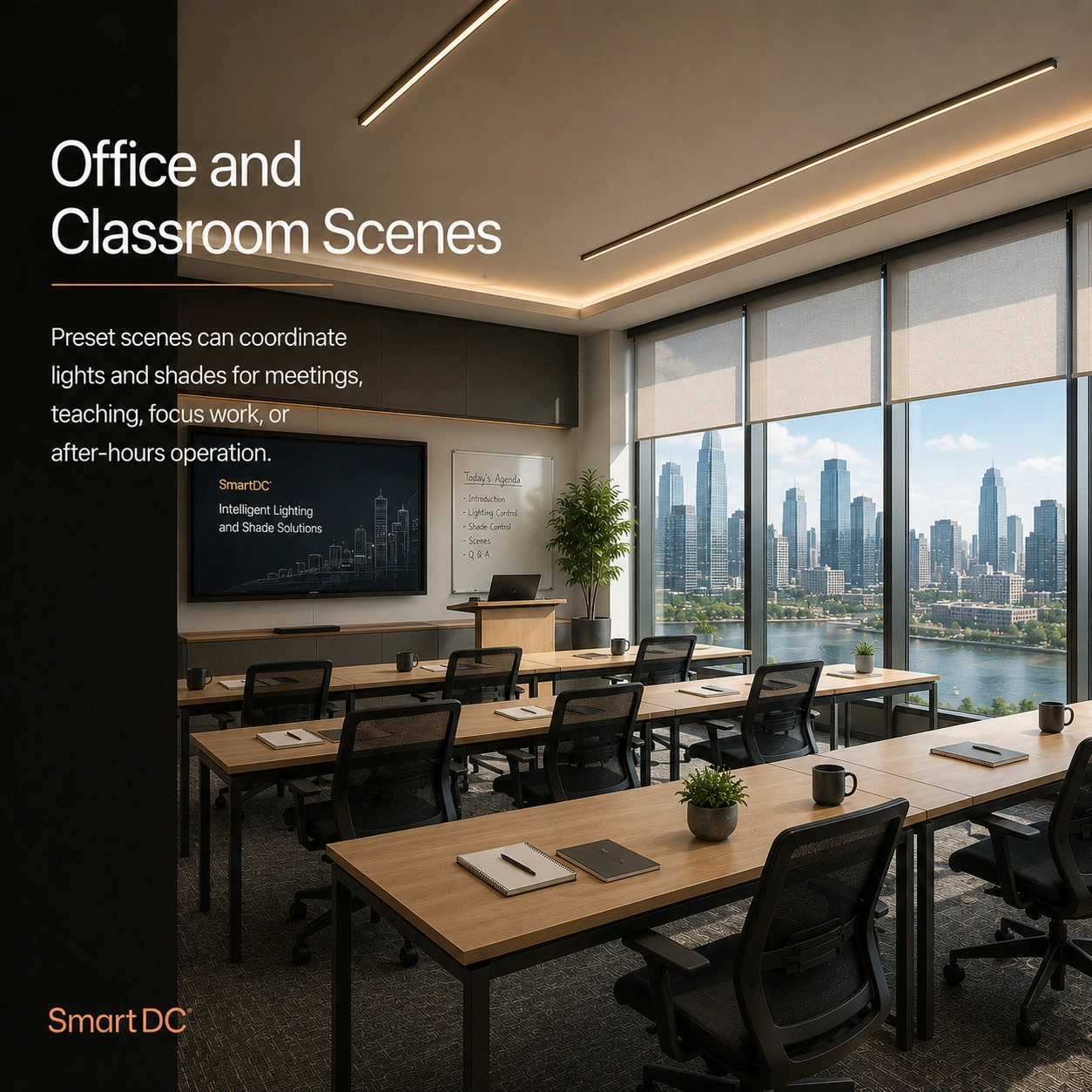
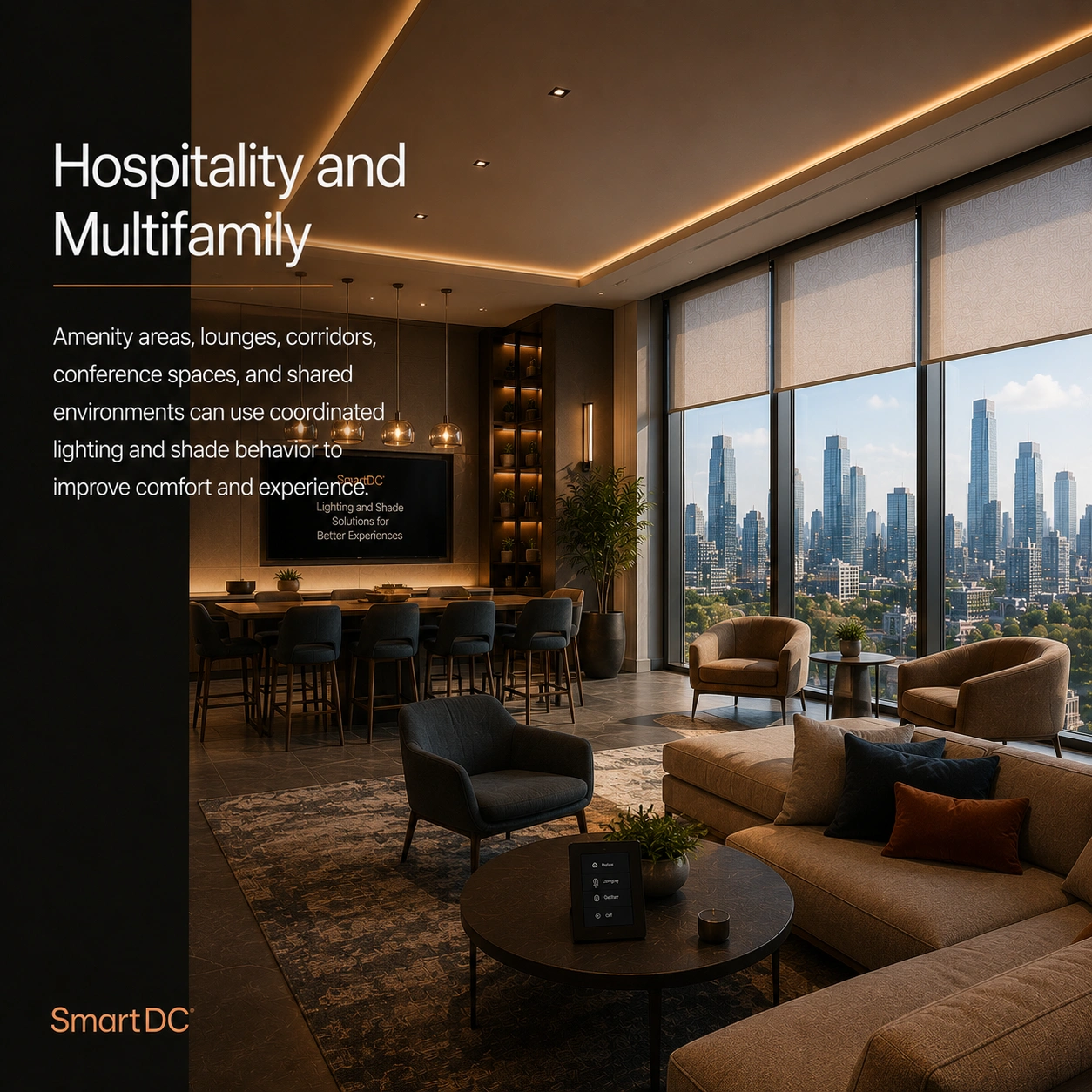
Lighting, daylight, and shade position should work together. SmartDC enables lighting and motorized shade systems to be coordinated through the SDCS CIO using scenes, schedules, sensors, WallStations, relays, contact closures, and API-based integration.

This allows spaces to respond intelligently to occupancy, daylight, user commands, time of day, presentation needs, privacy requirements, or energy goals.
Presentation Mode
Daylight Management
Occupancy-Based Control
Office and Classroom Scenes
Hospitality and Multifamily

Built-In API Connectivity
Through the CIO

The SDCS CIO includes a built-in API that allows the SmartDC platform to connect with dashboards, building systems, third-party controls, and remote monitoring platforms.

This makes the CIO more than a lighting controller. It becomes the local integration point for lighting, sensors, WallStations, relays, contact closures, shade interfaces, and connected building systems
Integration Points
  • CIO built-in API
  • SmartView™
  • EdgeLink™
  • Third-party dashboards
  • Building control systems
  • Remote monitoring platforms
  • Motorized shade systems
  • Relays
  • Contact closure inputs
  • Sensor interfaces
  • WallStations

Flexible Deployment Models

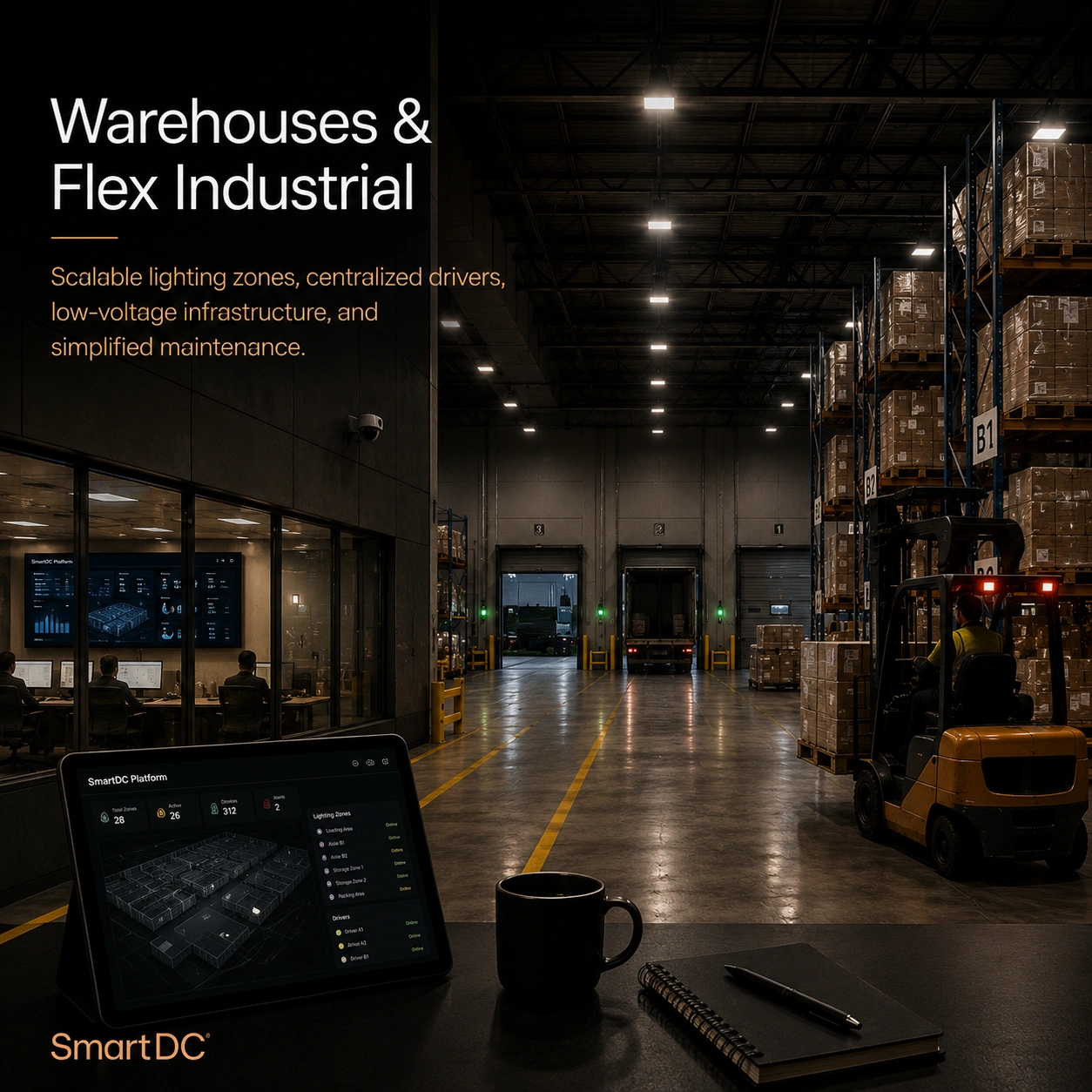
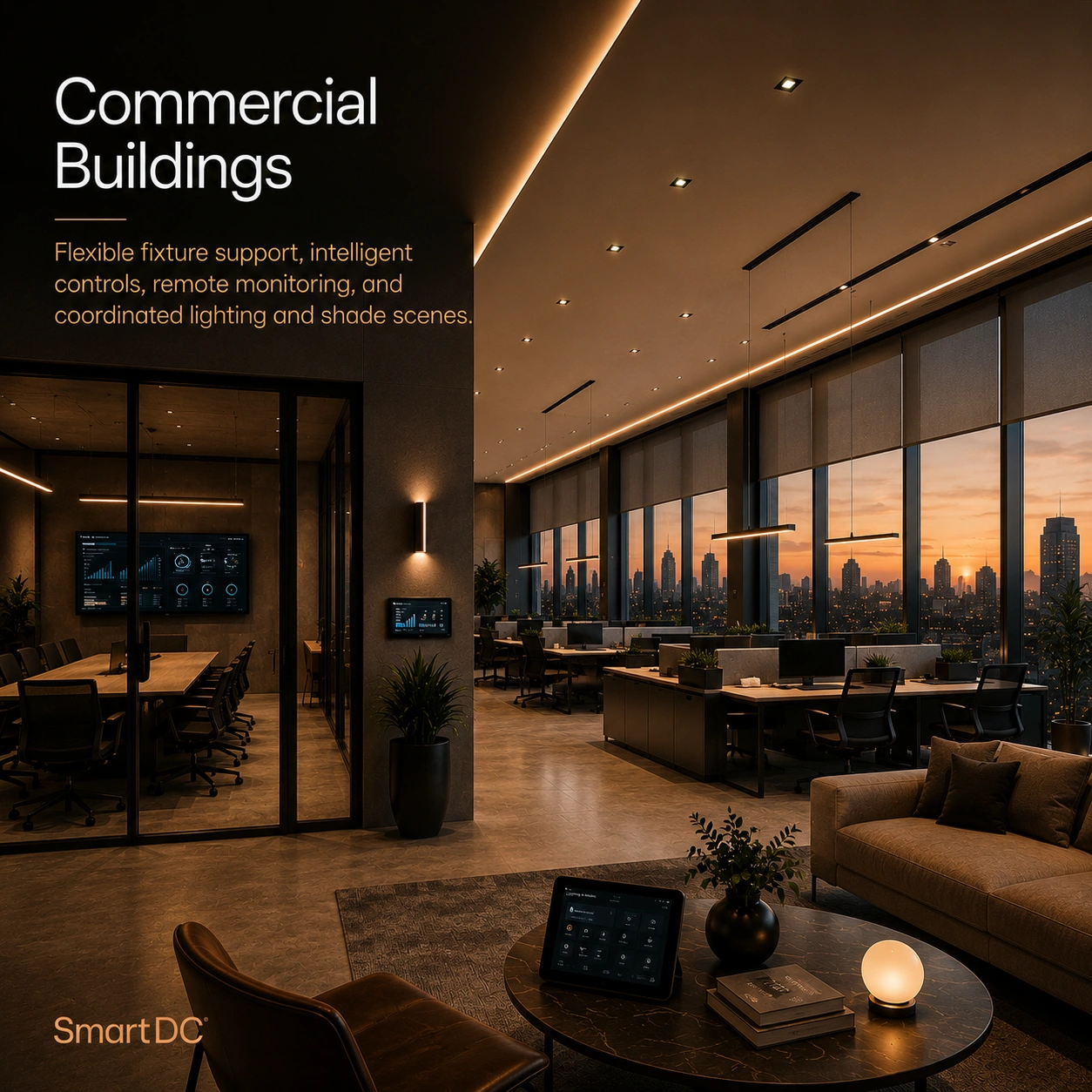
The SmartDC platform can be deployed in small commercial spaces, warehouses, multifamily buildings, campuses, and structured low-voltage environments.
Small Commercial
For warehouses, flex industrial buildings, manufacturing areas, and large open spaces.
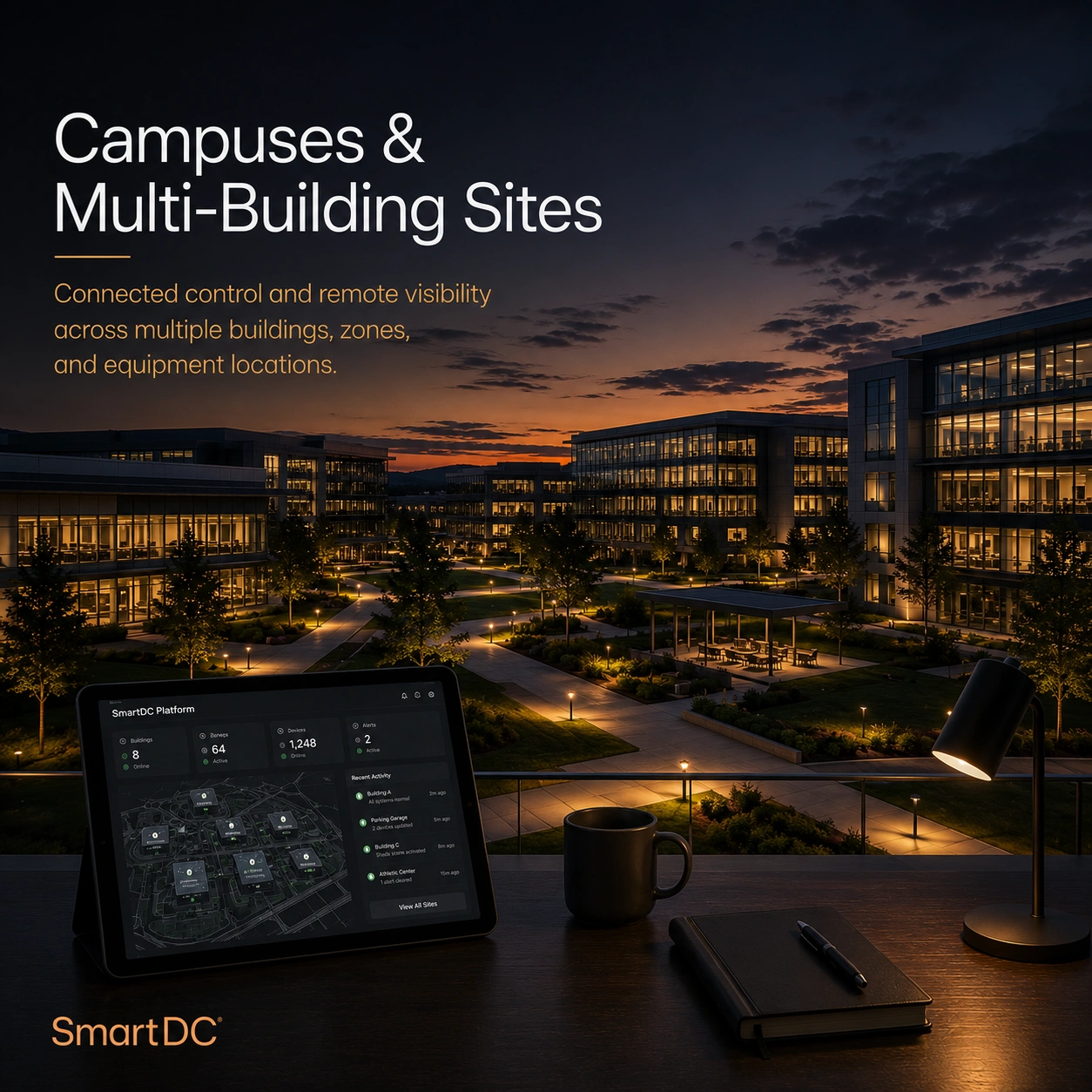
For schools, healthcare, corporate campuses, mixed-use developments, and multi-building sites.
Campus-Multibuilding-Architecture
For schools, healthcare, corporate campuses, mixed-use developments, and multi-building sites.
Multifamily-Mixed Use Architecture
For schools, healthcare, corporate campuses, mixed-use developments, and multi-building sites.

Why Buildings Choose the SmartDC Platform

The SmartDC platform can be deployed in small commercial spaces, warehouses, multifamily buildings, campuses, and structured low-voltage environments.

Purpose-Built for Lighting

SmartDC is designed around lighting power, fixture flexibility, zone control, and field deployment not Ethernet switch limitations.

Lower Installed Cost

Reduce traditional line-voltage complexity and simplify lighting infrastructure.

Centralized Serviceability

Move key driver and control hardware into accessible locations instead of burying electronics in every fixture.

Fixture Flexibility

Support a wide range of lighting fixtures, form factors, and project requirements.

Unified Room Control

Coordinate lighting, shades, sensors, WallStations, relays, contact closures, and automation events from one low-voltage platform.

CIO-Based Integration

Use the SDCS CIO’s built-in API to connect local lighting infrastructure with dashboards, building systems, remote monitoring tools, and third-party platforms.

Scalable Architecture

Start with one room or zone and scale to buildings, campuses, and multi-site portfolios.

Remote Visibility

Monitor system status, device health, energy activity, and connected infrastructure through SmartView™.

A Better Fit Than Traditional Line Voltage or PoE Lighting

Lighting Infrastructure Comparison
Traditional Line Voltage PoE Lighting SmartDC Platform
Fixture-by-fixture AC wiring Built around Ethernet switch ports Built around lighting power and control
Driver electronics located in every fixture Limited by available PoE power per port Remote multi-channel drivers
Harder to centralize service IT closet dependency Centralized low-voltage infrastructure
Limited system visibility Data-network focused Lighting-infrastructure focused
More complex changes after install Switch-port constrained Scalable by zones, drivers, and CIOs
Separate lighting and shade systems Shade control may require separate systems Lighting and shade integration through the CIO
Integration often requires additional systems Network-centric architecture CIO includes built-in API for integration

Where the Platform Fits

Warehouses & Flex Industrial
Commercial Buildings
Campuses & Multi-Building Sites
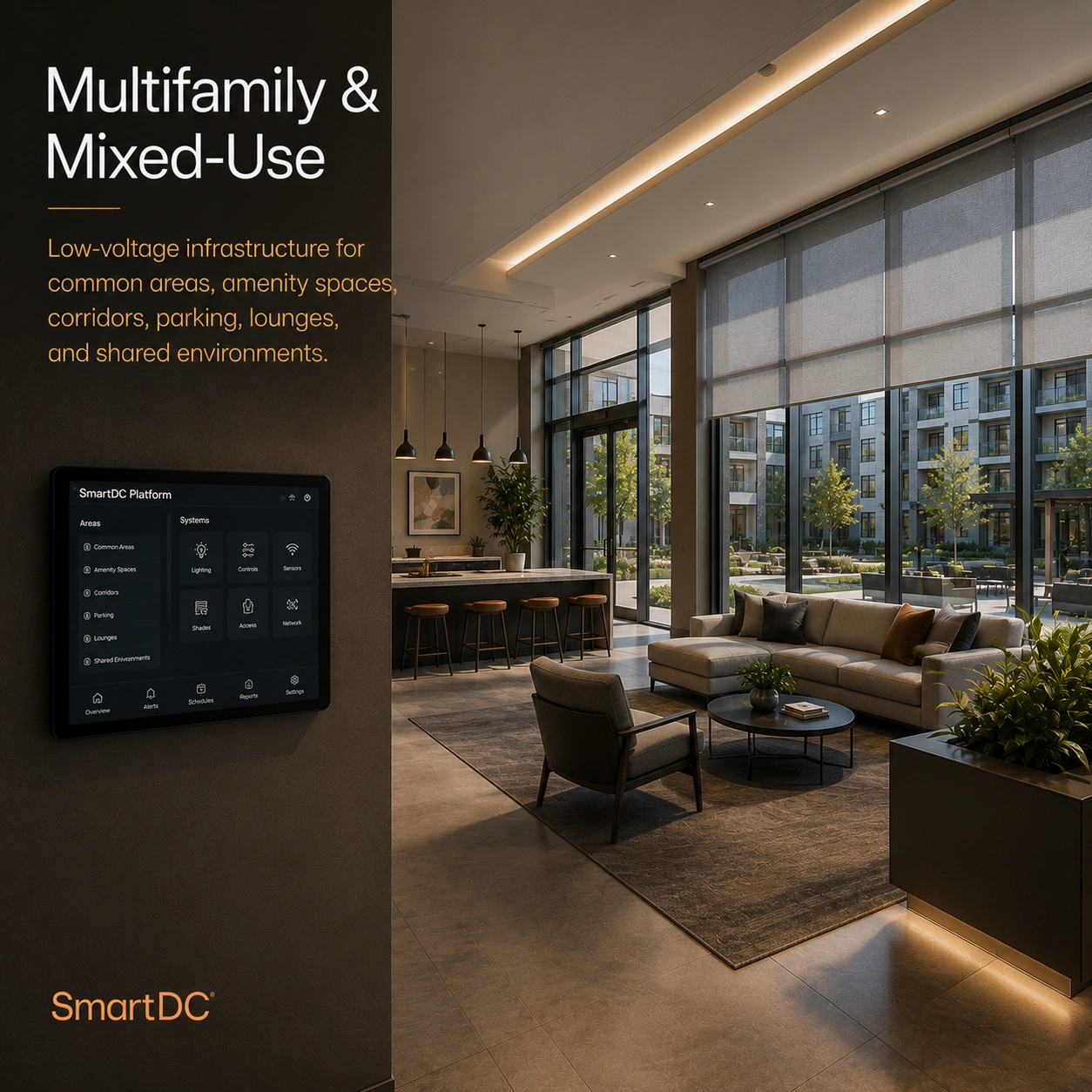
Multifamily & Mixed-Use
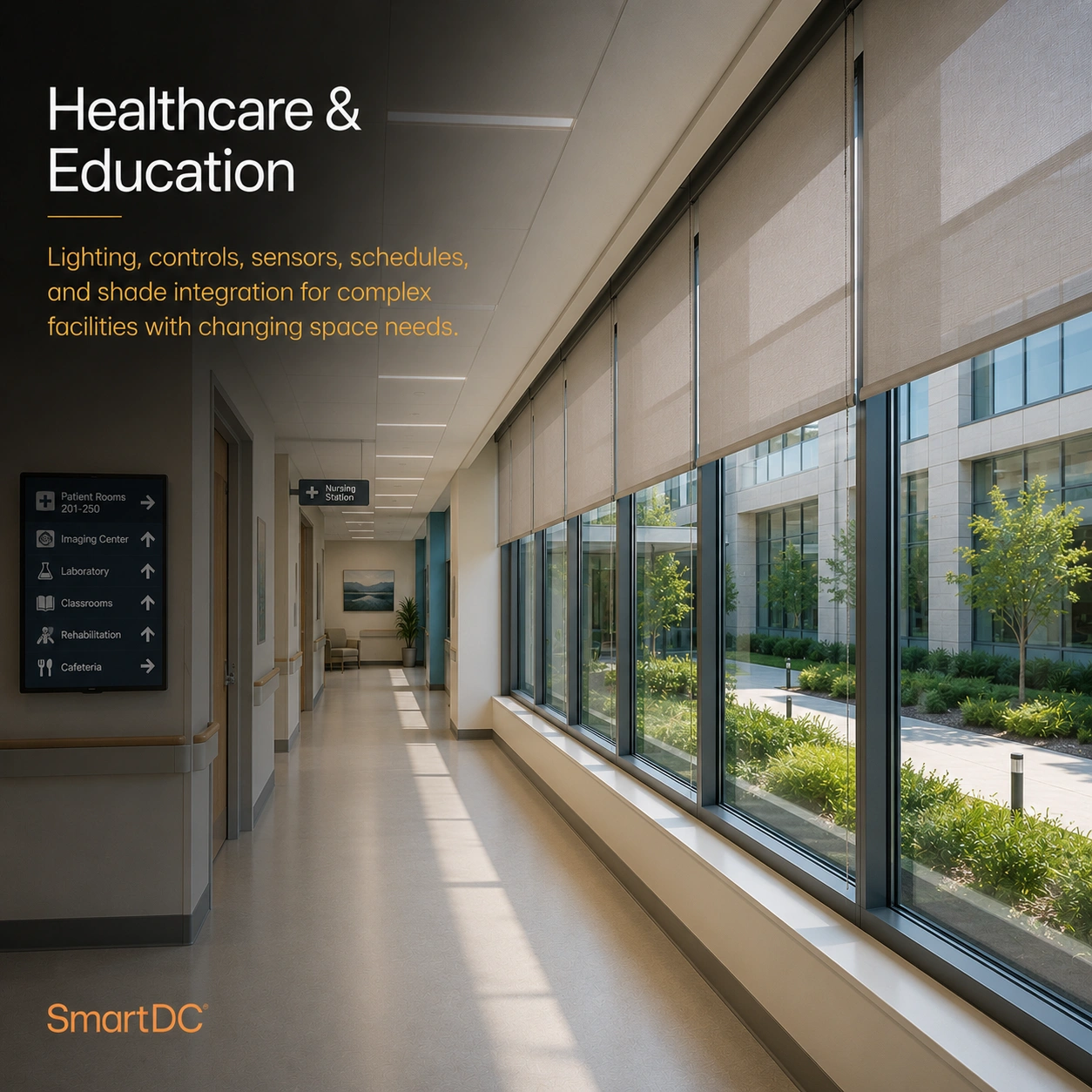
Healthcare & Education
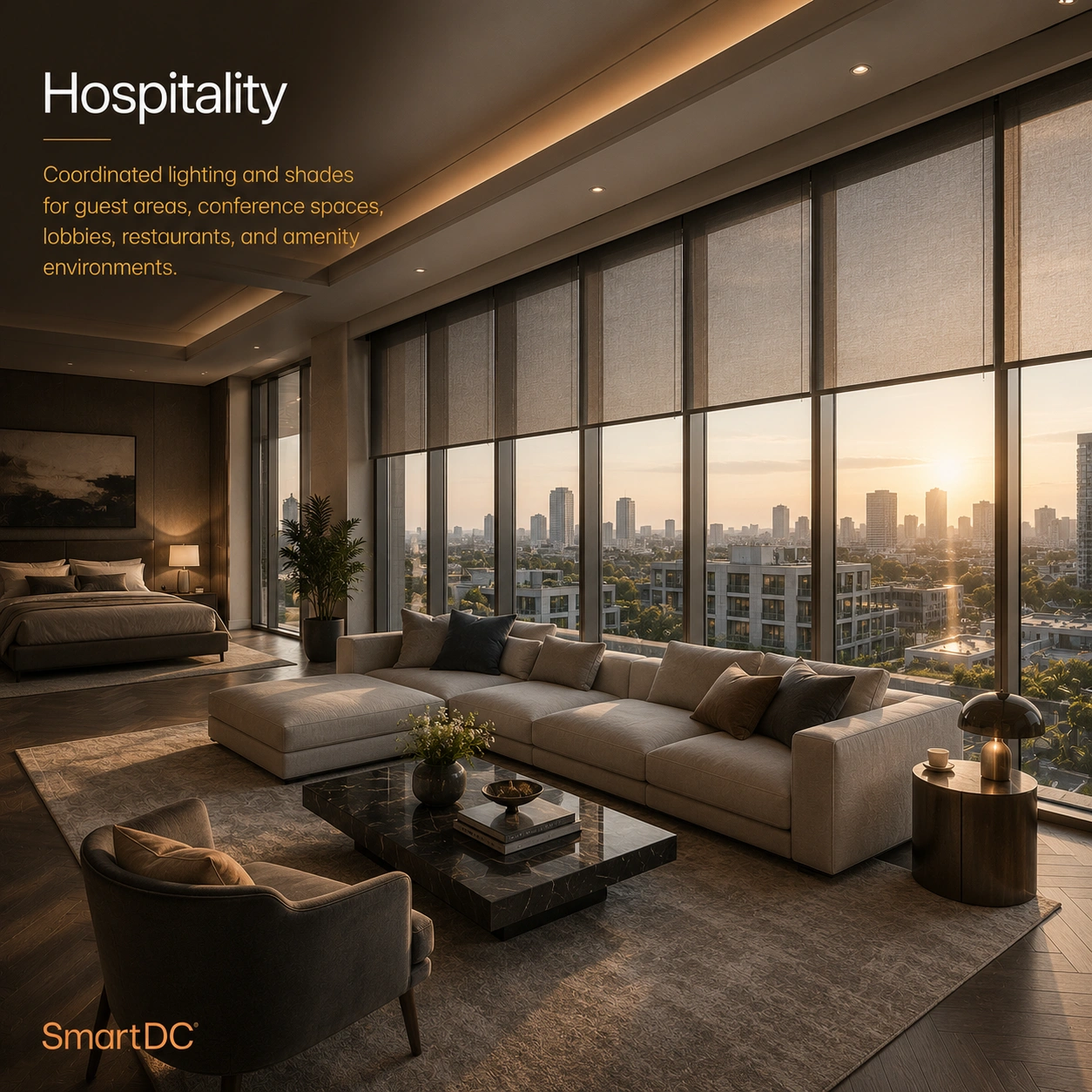
Hospitality

Where the Platform Fits

Architecture Diagram

Ready to Design With SmartDC?

See how SmartDC can simplify your next project with low-voltage DC power distribution, remote LED drivers, intelligent controls, CIO-based API connectivity, motorized shade integration, sensors, and remote system visibility.